
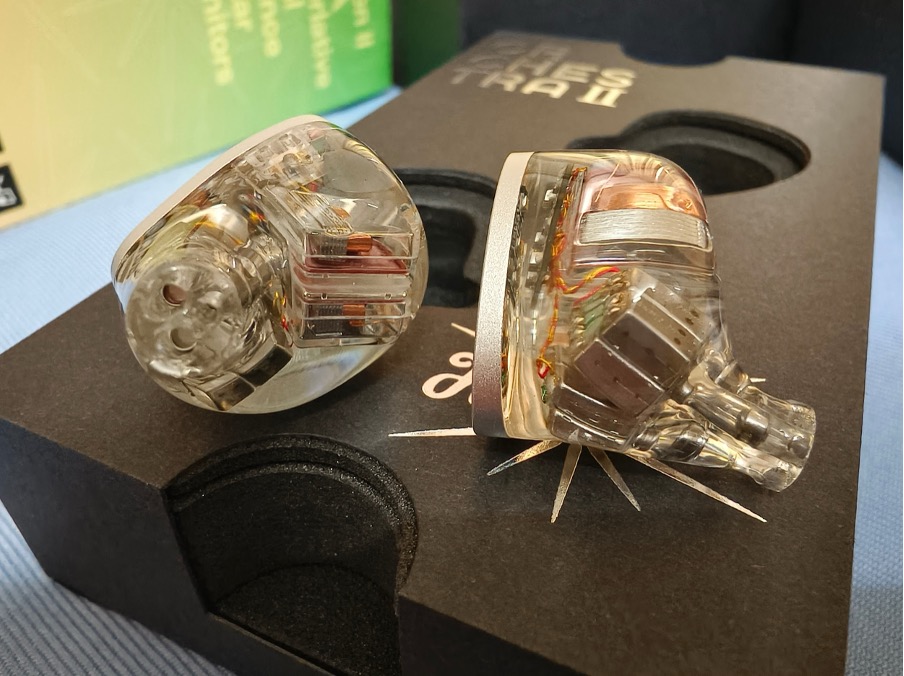
Silent in the making, rising from the depths, the Kiwi Ears Orchestra 2 marks the triumphant return of the brand’s flagship balanced armature series. Evolving from the popular 8 drivers Orchestra and 6 drivers Orchestra Lite, this next-generation model packs a sophisticated, 4 way crossover configuration of 10 balanced armatures per side. The clear resin shell and metal faceplate are more than just stylish; they frame a novel technical showcase as for the first time, Kiwi Ears has used transparent 29955 style bass armatures, allowing an unobstructed view into the inner workings of a balanced armature driver’ intricate internals. The Orchestra 2 is set to be a testament to their creativity, engineering and enthusiasm.
Rosie from Kiwi Ears has reached out to us and provided us with an early sample of the Orchestra 2 for us to give an honest take and we are truly grateful for the opportunity. Can the Kiwi Ears Orchestra 2 be the best IEM from them so far? We shall find out here and as usual, we are not affiliated nor taken any monetary exchange for these products and the review is an honest take which is an opinionated view.
Functions & Specifications
Before we start the review, here are the specifications of the Kiwi Ears Orchestra 2;
- Shell type : Resin body with aluminum and titanium faceplates
- Driver Configuration: 10 Custom Balanced Armatures 4 x Way Crossover Sensitivity(1KHz): 109dB SPL/m
- Frequency Range: 20Hz-20KHz
- Impedance(1KHz): 19Ohm
- Earphone Jack: 0.78mm/2PIN
- Plug Type: 3.5mm
- Cable Length: 1.25 Meters
The Kiwi Ears Orchestra 2 can be purchased through their website and Linsoul
Packaging & Accessories
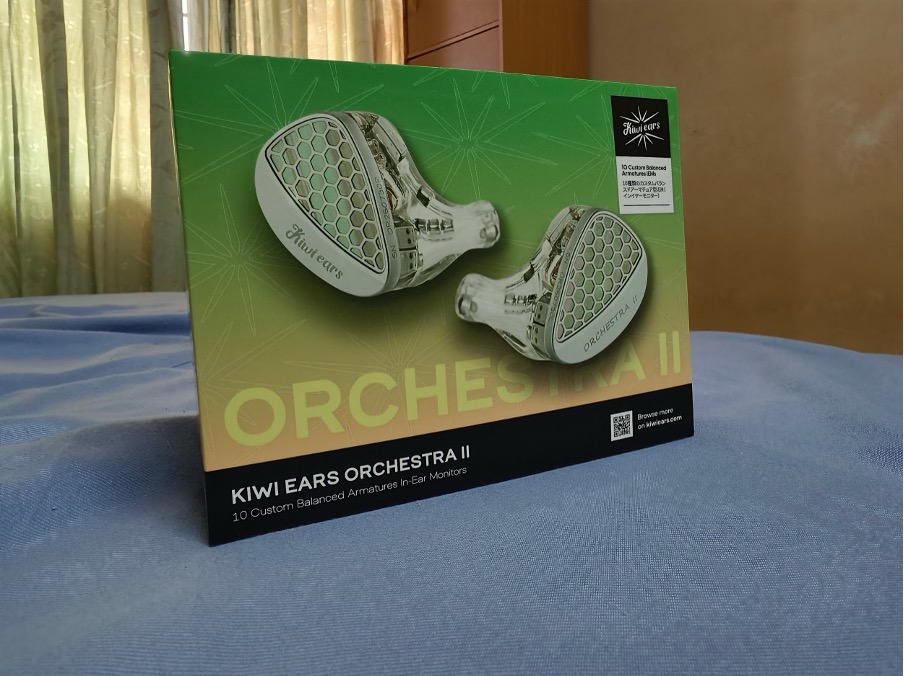
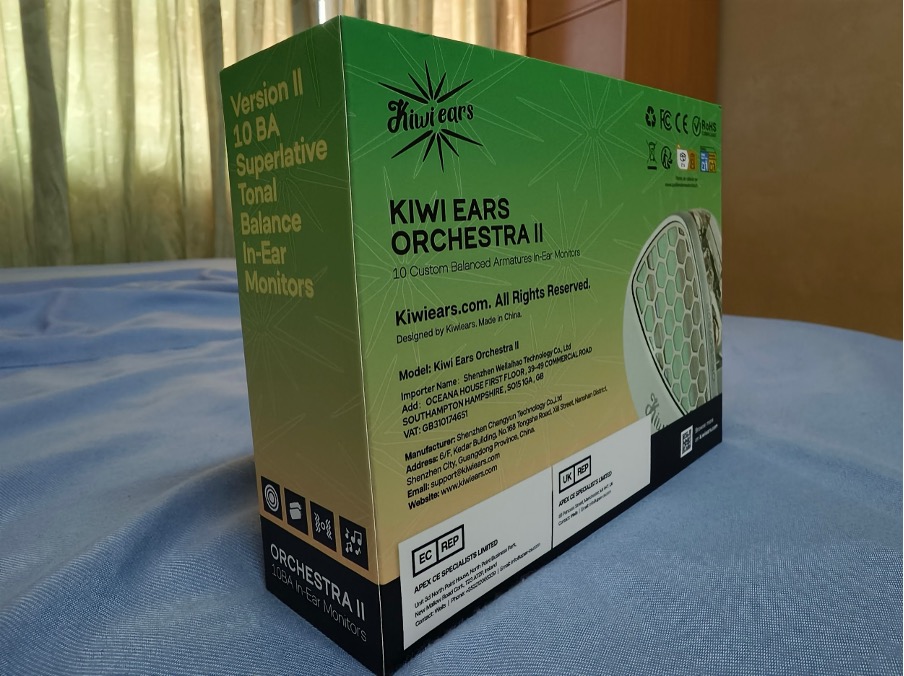
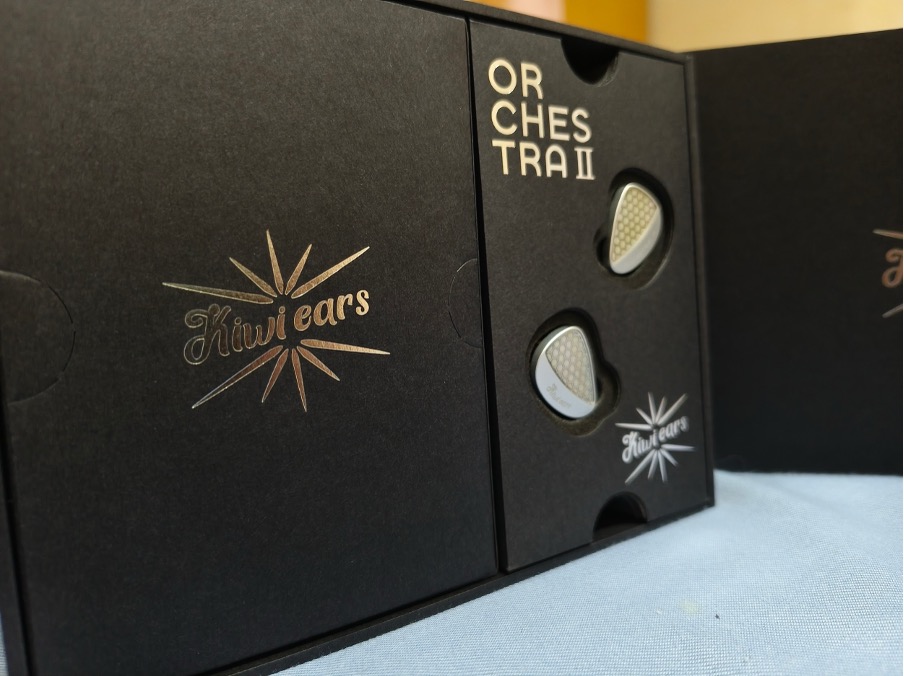
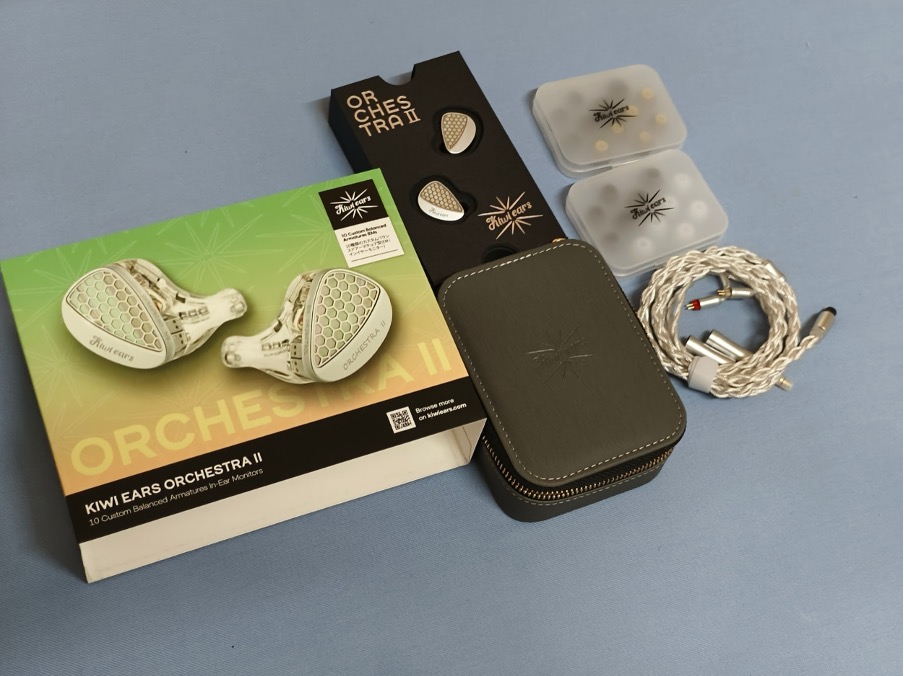
Most Kiwi ears product packaging and accessories are known for being rather simple and cost effective but not for this Orchestra 2 as they are packed to the teeth with high end accessories with a premium packaging. The rectangular box is slightly larger than their other products with the usual fun Kiwi Ears theme. Upon unboxing we shall find the IEM head displayed with accessories inside separate boxes. Here’s what included in the box;
- Kiwi Ears Orchestra II IEM x 1 pair
- Eartips (S/M/L) × 12 pairs
- 3.5mm plug x 1
- 4.4mm plug x 1
- Single Crystal Copper Silver-Plated Cable x 1
- Carrying Case x 1
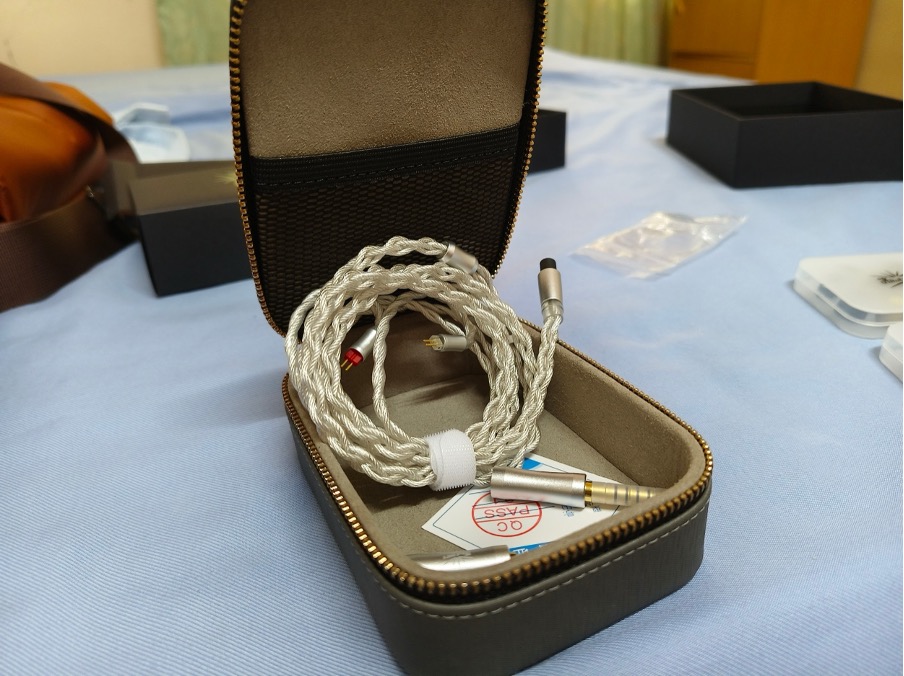
User Manual x 1 The accessories here are indeed worthy of a flagship IEM with the eartips come in their own casings, a high quality zippered hard case and a high quality single SPOCC modular cable. The best packaging by far from them and might be the best in their price range.
Design
The design here is having mixed reactions as those who are aware of KZ earphones might find them a little unappealing as they do look similar to some of their offerings but for those that are ambiguous, they actually look uniquely eye-catching. Built here is solid with an ultra clear acrylic resin body that is glossily polished and a faceplate made from titanium with an aluminum honeycomb pattern laid on an iridescent abalone shell back. Finishing here is good and they fit ergonomically. The shell here is chunky or thick and they are a tad big in their size so it might pose issues for those with small ear conchas.
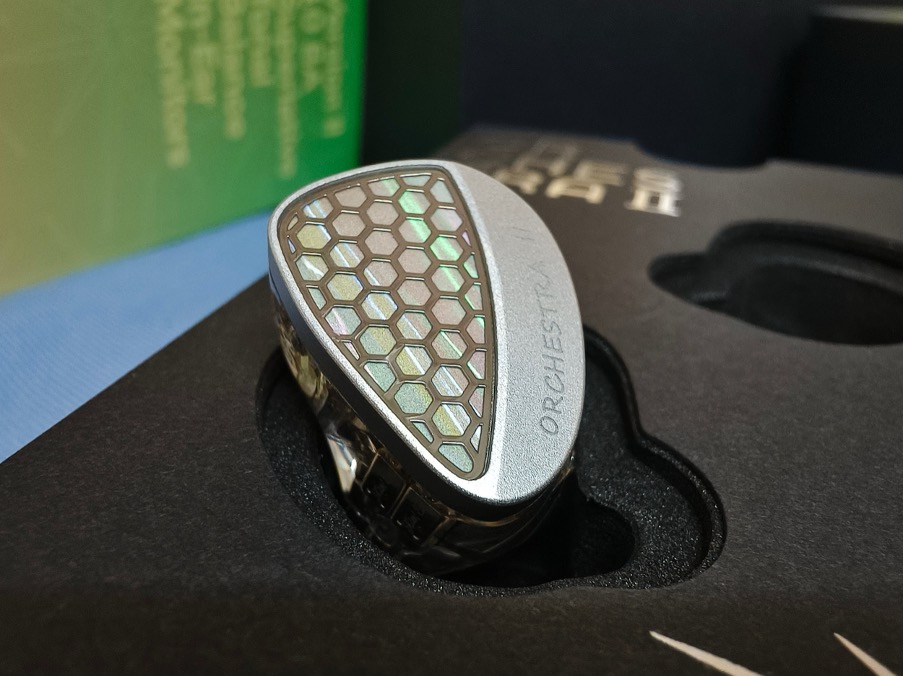
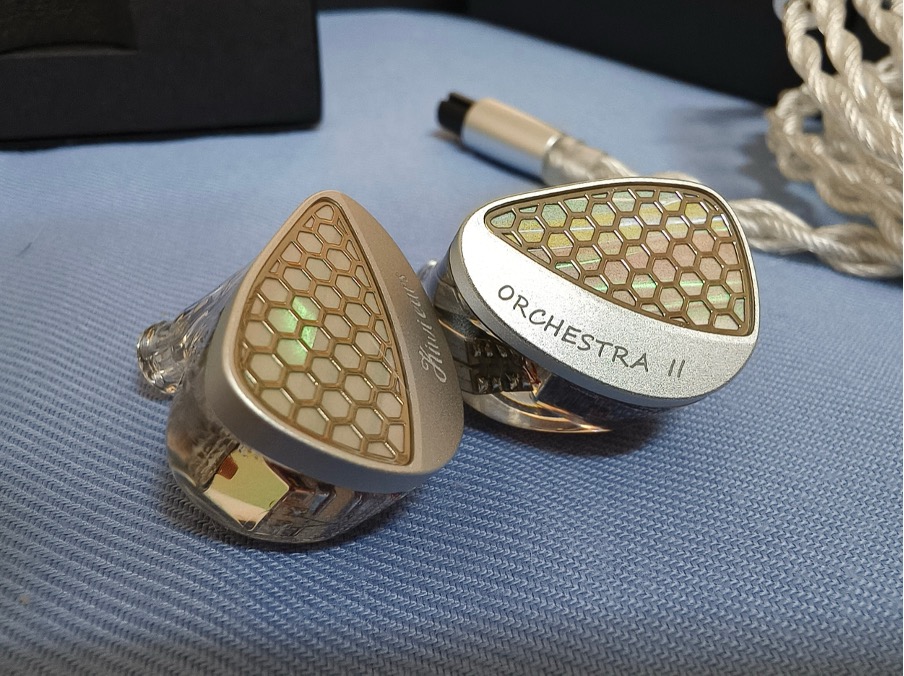
The insides of the Orchestra 2 is packed with a total of 10 balanced armatures per side with an exclusive 4 way crossover system that is tuned by Kiwi Ears to produce a cohesive sound that conveys their fun house sound signature sprinkled with some uniqueness. All these balanced armatures are custom made to Kiwi Ears specifications and they have their branding stamped on them. The main takeaway here is their unique transparent bass armatures that are similar to Knowles 29955 drivers that shows their insides and they are tuned to provide a deep sub-bass response that suits EDM, hip-hop and jazz
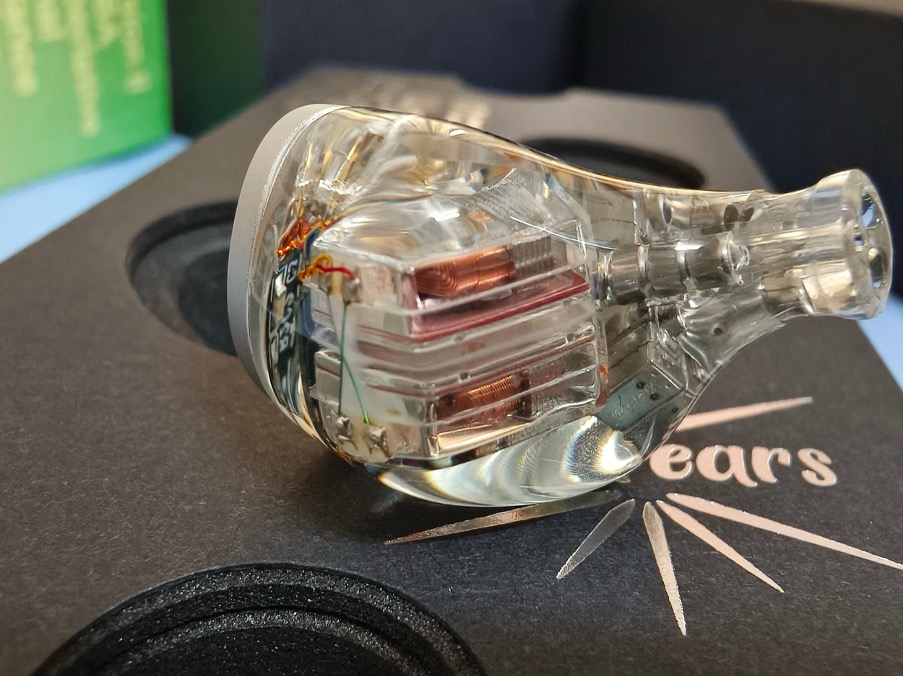
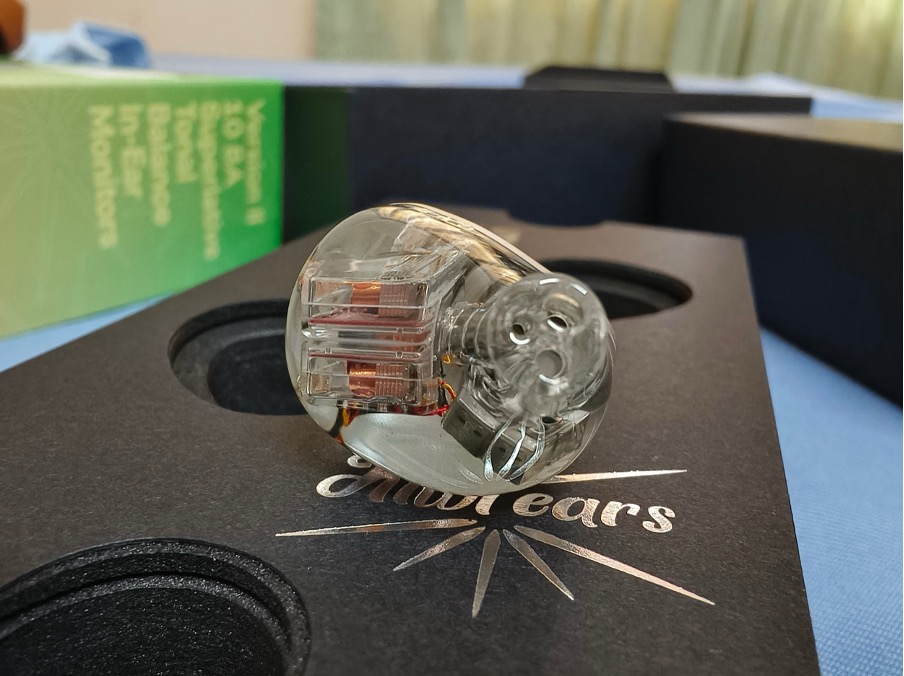
The nozzle here has a width of 6.5mm at the tip with bores for the nozzles. There are 3 bores at the tip to correspond to the bass, mids and high range.
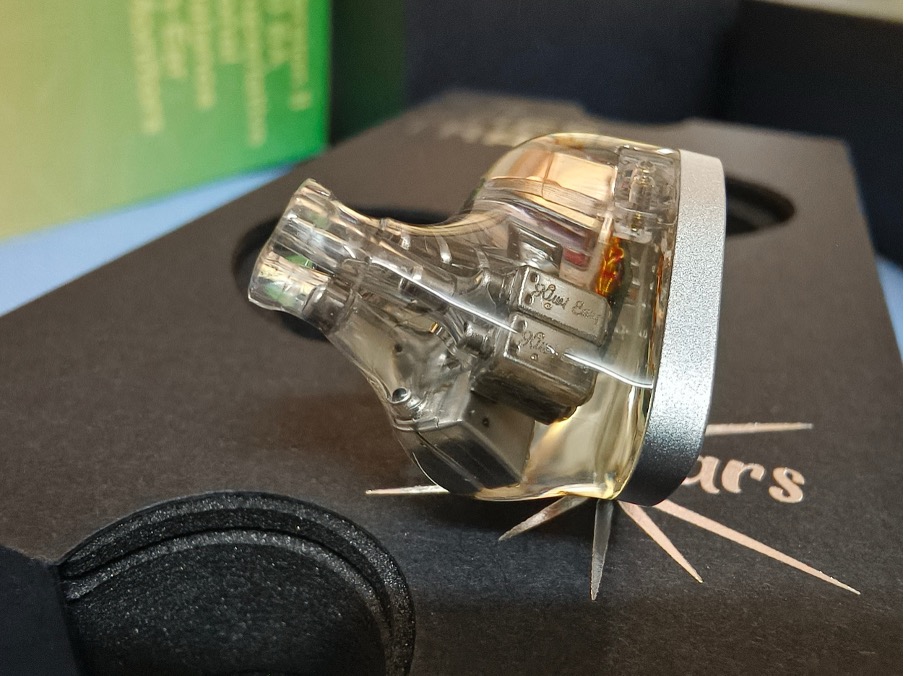
There aren’t any vents on these IEM and there is some minor pressure build up with certain eartips but isn’t a deal breaker for me. The connectors used are the standard flush 0.78mm 2 pin.
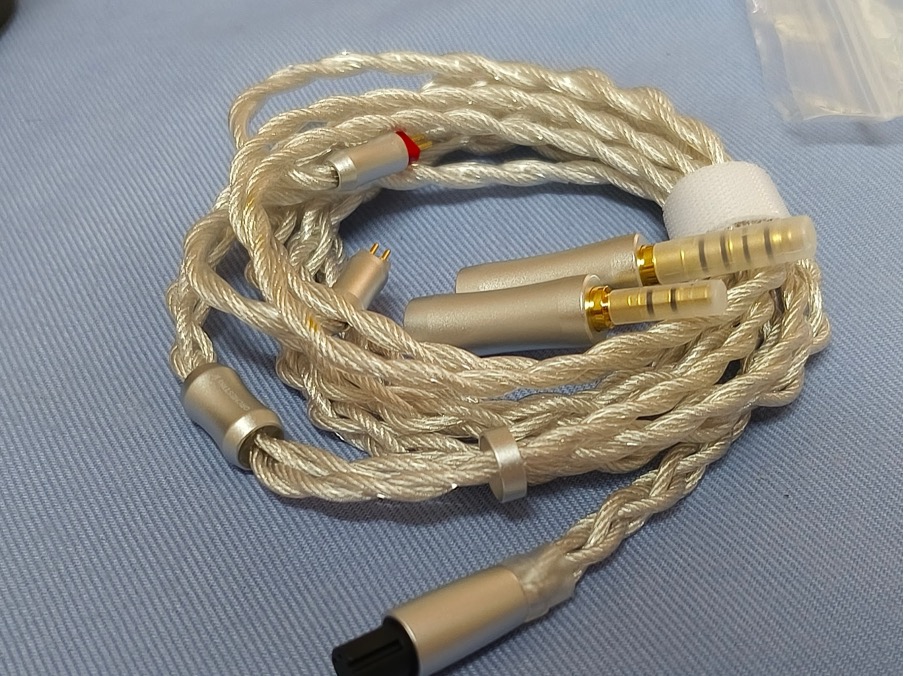
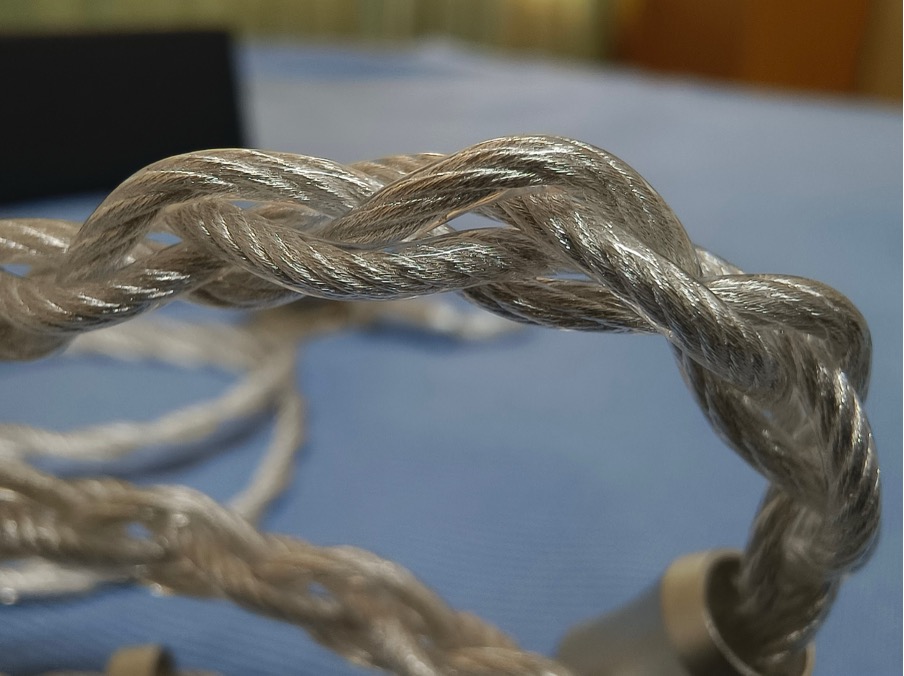
The cable included is the best quality cable so far by Kiwi Ears and they are 4 braided core silver plated Ohno continuous casting cable that is modular terminated with choice of 3.5mm and 4.4mm head. All the parts are made from metal and the cables are slightly thick but quite pliable suited for everyday use. The sound quality from the cable is great and has a superb neutral sound that is slightly bright.
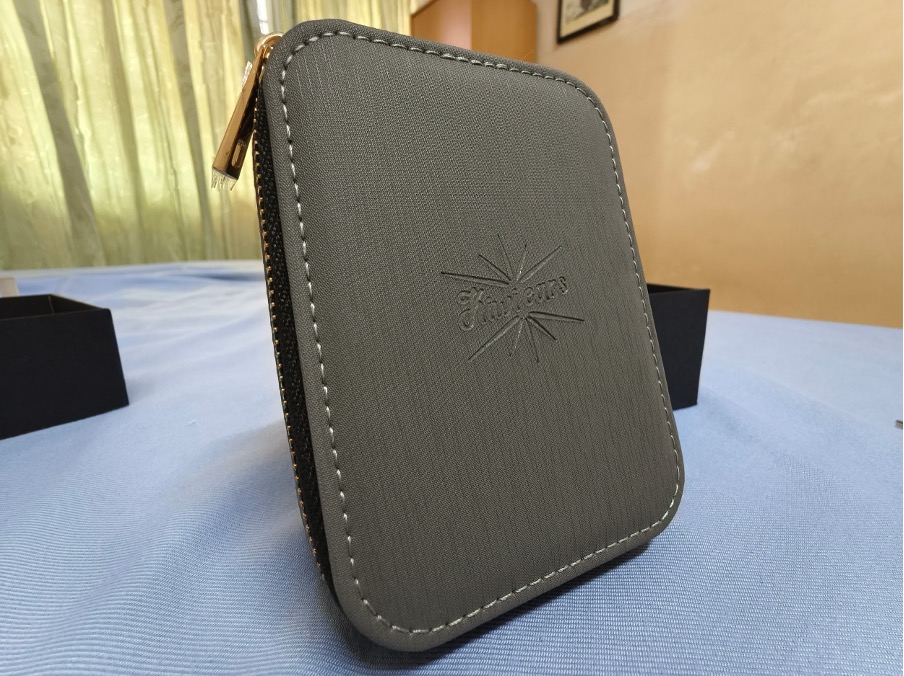
Also worth noting that Kiwi has finally provided a top class hard leather case with golden zippers. They are very practical for their big space and do provide great protection for the IEM with their velvet inner side. Thumbs up.
Gears Used for Comparisons
FiiO Q7
Hiby FC6
Questyle M15
EPZ TP35
FiiO BTR7
Dunu Luna
Dunu EST112
Soratune YI01
BQEYZ BQ10
Intime Sho DD
Rose Technica Star City 5 Pro
Intime Sho DD
Letshuoer S15
Songs list
Scorpion – Hurricane
Ella – Standing In The Eyes Of The World
Dakota – Avalon 6AM
Whitney Houston – I Will Always Love You
Adele – Chasing Pavements
Tina Turner – Simply The Best
Josh Groban – You Raised Me Up
Slander, CRANKDAT & Asking Alexandria – Kneel Before Me
Blink 182 – Adam’s Song
Metallica – Fuel
Tone and Presentation
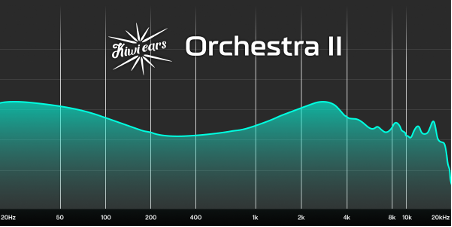
The tone of the present on the Orchestra 2 is V to almost a W shaped sound that has a boost in the lower end with a mildly forward mids and lifted yet smooth high range. Their tone has a tilt towards the warmer side that gives an overall sweeter, lusher sound and they are suitable for a fun listening experience while still suiting clinical usage as for their highly technical sound. They have a wide dynamic range that possesses great extensions especially on the low end and the highs producing a rather airy sound presentation. Musicalities here are superb with a colourful sound that is vivid and full bodied without any dryness or sterility.
Soundstage
The soundstage here is good with a width and height with a free field sound that projects sound straight into your ears to give a more intimate sound and the soundstage here isn’t an open, diffused type of sound. Their overall forward, thick sound does actually mask the soundstage by a margin but they are still capable of giving a decent amount of headroom without any major boxiness. The air here is good, especially in the lower region that extends deep. Being an immersive sounding IEM, their positioning of sound is great with a holographic soundstage that projects sound naturally and directions are easily distinguished making them suited for gaming and movies.
Separation and Timbre
Separation is great with a superb stereo separation that is wide and has no crosstalks issue even with a single ended setup. Their ability to convey sound in tandem that makes the 10 balanced armatures work harmoniously is respectable and it isn’t a simple feat to achieve especially within their price range. Timbre here is organic, rich and they are a full sounding IEM that has a rather warm sound that is inviting without any dryness issues that usually plagues balanced armatures. There is a tinge of metallic sheen present in the high region that might affect some vocal timbre but nothing too distracting.
Drivability
Rated at 19 ohms with a 109 db sensitivity, they may seem easy to drive but I personally feel that the Orchestra 2 needs a clean setup to increase their overall technicalities. While they don’t need much power to give ample loudness, a normal wired dongle does the job well but with a cleaner, more powerful setup will bring out the best of the Orchestra 2 by providing wider dynamics and more refinements by giving a cleaner lows and reducing the metallic timbre. Source pairing is also important as a certain bassy source will cause some bleed and bloat present on the bass to midrange marginally. The Orchestra 2 pairs really well with a neutral and bright sound signature to give them a better presence at the midrange. In terms of file selection, they aren’t a picky pair as they sound great even on streaming, while highly quality tracks do sound better, the difference here isn’t night and day making them a suitable pair of IEMs for travel but isn’t too suited for professional usage.
The Bass (Low)
The main strength and dominant part of the Orchestra 2 is the bass as they are authoritative with a lifted mid-bass that extends to the sub-bass without overpowering the other frequencies. The 2 bass balanced armatures has a unique, custom design and it is encased in a transparent shell, making the inner magnets and coil visible through the clear resin. Details here are great with a slightly loose slam and they roll off slightly slower which gives the bass better extension and air. The bass does mimic a dynamic driver’s bass in depth, energy and texture which is surprising coming from balanced armatures drivers and they are able to play well with bassy tracks like EDM, hip-hop and jazz. The bass has the ability to keep up with busy tracks and they manage to keep the bass relatively clean even when being pushed to their limits but on bassy sources that actually adds amount to the lows, there is some bleed present into the midrange. There is a decent amount of mid-bass lift that blends well with their boosted sub-bass to give a full sounding bass that may actually suit bassheads. The sub-bass dives deep with an above average rumble that is well controlled matching the overall sound presentation of the Orchestra 2.
The Mids
Midrange is a neutral balanced mids with a forward, full-bodied mids that is thick, rich and intimate. The boosted bass transitions well into the midrange giving a balanced sound without any hollow feel. Details here are superb as typical of a balanced armature setup and they do have great clarity across the whole midrange with great capabilities of presenting macro and micro details well but more on the former. The forward mids actually does give a rather close space that isn’t as spacious but they do provide a more intimate sound that makes certain vocals sweeter and lush. There is some coloration present here that produces a vivid, resolving sound that contributes into the overall fun sound of the Orchestra 2 but in return, their transparency isn’t on a monitoring level albeit still natural sounding. The progression into the upper mids and high range is smooth with a very mild peak that gives some amount of brilliance into the midrange to give a livelier overall sound. Vocals are balanced as female or male vocals have the intimacy while being deep and possessing some brilliance to bring a vibrant vocal presentation. Same goes to instruments as they sounded mostly natural with strings, drums, flutes but due to their slight coloration present, some strings like bass might sound a little too thick or unnatural.
The Highs
The high here is a flat signature that has a mild bright tone that balances well of being inoffensive while being present. The highs have a good amount of sparkle and they are crisp in their presentation that produce a lively high range that goes well in their overall sound. The transition from the upper mids is superb as they have a mild uphill peak into the 10khz region that completes a full sounding pair without any weird hollow feel. The mild peak here also gives a rather inoffensive sound that doesn’t possess sibilance, shout and hiss while having a good, lively presence that isn’t dull. There is some metallic timbre present that is typical of a crisp sound but they don’t interfere much till the point of being distracting. Details here are decent with a good amount of clarity that shows high nuances well and the ability to keep up with fast tracks is commendable. The roll off here is slow and that gives a lingering high range that has a great amount of air present. The overall high range amount is borderline being too strong for treble sensitive users but aren’t too acute that causes fatigue in the long run. Treble here is quite balanced while leaning more towards the intense side and that gives the overall IEM better clarity without any major harshness.
Comparisons
VS Moondrop A8
The now discontinued classic from the glory days of Moondrop, the A8. They are a 8 balanced armature beast that cost 666USD at time of launch and I personally do feel that they are the best IEM from moondrop with a thick, neutral and balanced sound that has superb accuracy. The Orchestra 2 does have the edge of having a better value by costing half of the A8 without a doubt but the A8 is 5 years older.
High range is pretty similar with the amount of sparkle and a mild crispness and has the same clarity but the A8 sounded clearer on the Orchestra in a small margin. Timbre on the A8 do sound more natural without any metallicness. The highs on the Orchestra 2 do sound livelier with a tad more energy.
Midrange on the Orchestra 2 sounded fuller and thicker with a slightly more vivid sound while the A8 has a more spacious midrange. Transparency on the A8 is better with less coloration. Vocals on the Orchestra 2 are more intimate with a sweeter sound while the A8 has better accuracy.
Bass quantity on the Orchestra has the edge of being stronger and harder hitting with their bigger mid-bass lift and they have a slower roll off that gives a touch of air. Sub-bass amount also goes to the Orchestra 2 but the A8 does have a better accuracy . Bass texture on the A8 is slightly better but energy on the Orchestra 2 is bigger suiting bassy tracks.
Soundstage on both is similar but due to the thicker sound of the Orchestra 2, the A8 does feel wider and spacious.
Verdict: Value and fun totally goes to the Orchestra 2 but the A8 do sound more refined and balanced suiting a wider range of genres like acoustics.
VS Ziigaat Luna
The Ziigaat Luna, a 6 balanced armatures studio grade IEM that has Ziigaat’s house sound of a mild boost in the lows while having a smooth, extended sound. It is a highly regarded IEM and probably my pick for all balanced armatures IEM of the year as it manages to sound mostly neutral but having a velvety sound that is just inviting. They cost a tad more than the Orchestra 2 but having 6 Knowles drivers will indeed drive up the cost. The Luna also has a smaller, slimmer shell that fits more ear types but the Orchestra 2 packaging does feel a tad more premium.
Highs on the Orchestra 2 do sound brighter and stronger with better energy but they do possess a mild metallic timbre. Sparkle is also more evident on the Orchestra 2 and they are crisper but the Luna has better accuracy and smoother with a tad more extension.
The midrange of the Luna does sound more accurate with less coloration and has better transparency while the Orchestra 2 has a more forward mids that is more intimate but lacks space. Details are better on the Luna but clarity does go to the Orchestra 2 with better brilliance at the upper midrange.
Bass on the Orchestra 2 has the edge in amount as it is being boosted while the Luna has the neutrality with a tighter bass. The Orchestra 2 has better extension and air with a deeper and stronger sub+bass rumble. Texture on the Luna sounded better with a slightly cleaner bass.
Soundstage on Luna does sound wider and a tad airer.
Verdict – Luna for their more natural timbre and more balanced sound but for a more fun signature, the Orchestra hits the spot.
VS Kiwi Ears Astral
The flagship hybrid of Kiwi Ears, the 1 dynamic with 6 balanced armatures Astral that is priced slightly less than the Orchestra 2, at 299USD. Both of these sets have a similar house sound with their boosted lows, thick mids and a smooth yet present high range. The Astral does possess a more natural bass for their dynamic driver but the Orchestra 2 bass hits harder which is surprising for a balanced armature setup. The Astral does sound a tad wider and spacious while the sonic allure on the Orchestra 2 is undeniable.
Highs on both are pretty similar with the Orchestra 2 having a livelier sparkle while the Astral sounds crisper. Details and clarity on both are similar. Timbre on both have a slight metallic tinge but it seems lesser so on the Orchestra 2.
Mids on the Astral has a more spacious presentation while the Orchestra 2 is a more forward type that has a more intimate feel. Vocals sounded lusher and thicker on the Orchestra 2 while the Astral has better accuracy and air
Bass amount overall leans towards the Orchestra 2 especially in the sub-bass region marginally. The Astral bass do sound more organic with a natural decay typical of a dynamic driver’s bass. The Astral bass amount is still considered strong but the Orchestra 2 is certainly bolder.
The soundstage on the Astral has better depth and has more air partly due to the forward, thickish sound of the Orchestra 2 that masks the soundstage but only marginally.
Verdict – both sets supremely fun but Astral do sound more balanced side by side while the Orchestra 2 is more unique for their bolder sound and they have better immersion.
Synergy
The forward, bass-dominant sound of the Orchestra 2 matches well with bright-to-neutral balanced sources, and they do not go very well with warm-to-bassy sources, as they might incur bleed in their bass to the midrange as well as having overpowering issues. They do match most Sabre-based setups but those without the infamous Sabre glare, as it will exacerbate the unnatural timbre of the balanced armatures. They are an easy-to-drive IEM and aren’t a sensitive one to pick up noise; therefore, they are an easy, simple IEM on the go without the need of an expensive setup.
Good synergy
FiiO BTR7, Hidizs S8 Pro, Questyle M15, FiiO Q7, Qudelix T71, FiiO KA5, Time Ear BTE9
Not so good synergy
EPZ TP35, Hiby FC6, 7HZ Artemis39
Who Is It For?
Suitable for – Classicals, hip-hop, jazz, metal, rock, pop, EDM, electronic, male vocals, light bassheads, movies, gaming, casual listeners
Not really suitable – Female vocals, some strings like violins and electric guitar, live recordings, treble lovers, monitoring/critical listening
Final words
The Orchestra 2 represents Kiwi Ears’ culmination of the years, a justified and compelling proposition featuring a complex 10-BA driver setup tuned for coherence. The physical construction is excellent, with the only minor point of contention being a faceplate design that may evoke certain budget IEMs for some but a subjective as beauty lies in the eyes of the beholder.
The energetically V-shaped sonic signature that provides a robust lower-region presence that excels with genres like EDM, hip-hop, and jazz but not limited to. It deliberately sacrifices neutrality for a more engaging and “fun” listening experience which is a hallmark of the Kiwi Ears house sound and it is executed here with immersive allure. This is a well thought out product that justified their price point, further enhanced by superb accessories including a high-end modular cable and a noble casing. The Orchestra 2 successfully concludes Kiwi Ears’ year and positions the brand as a key one to monitor in 2026.
I would rate this product a 4 and half over 5 stars.
Pros
- Great technicalities (separation, imaging, details)
- Solid build with ultra clear resin and aluminum, titanium faceplates
- Unique transparent bass drivers
- Cohesive 10 balanced armatures tuning
- Warm, intimate and highly musical
- Great overall details and clarity
- Organic and rich timbre
- Great dynamic range
- Authoritative, meaty mid-bass with strong sub-bass
- Thick, vivid midrange
- Smooth extended high range with great sparkle and crispness
- Fatigue free
- Highly resolving and fairly transparent
- Flagship accessories
Cons
- Thick shells
- Not really suitable monitoring or clinical listeners
- Some bass bleed present with bassy sources (nit-pick)
- Coloured midrange
- High range metallic timbre
- Intimate soundstage
- Slight pressure build up