
Disclaimer
- The reviewed IEM is sponsored by TinHiFi Audio, I grant my utmost gratitude for making this review possible. Nevertheless, all opinions remain original ideas, there was zero influence from any 3rd party or external opinions throughout the review.
- No EQ or filter presets were used during the entire sound evaluation.
- Sound evaluation are kept neutral and does not include 3rd party accessories (ie; eartips, cable, reversible mods)
Pros
- Robust, proven and durable lightweight aluminum shell.
- Extremely easy to drive.
- Small, ergonomic form factor (though the 6mm nozzle is a bit wide).
- Lush, warm sound that favors male vocals.
- Smooth upper-mids ensure a relaxed listen without shoutiness.
Cons
- Persistent driver flex clicking/popping when inserting.
- Excessive bass warmth veils the midrange and blunts vocal textures.
- Claustrophobic soundstaging.
- Mid-bass feels boomy and slow.
- Stock SPC cable is thin, prone to tangling.
Introduction
TinHiFi is back with the T2 MKIII, a sequel to one of the most recognizable IEM within the ChiFi realm. It retains the classic, ergonomic bullet shape we’ve known for years that proved neutral, reference-like sound didn’t need a premium price tag. In a market obsessed with technicalities, the new MKIII aims for a non-fatiguing, “safe” listen for the daily commuter. However, retailing at an affordable $49 or roughly RM193 (based on current exchange rate) this places the T2 MKIII in a crowded field of plenty other IEMs. Therefore, does this nostalgic shell still have what it takes to stay relevant? Here is my short breakdown of the T2 MKIII.
Unboxing, Build and Comfort
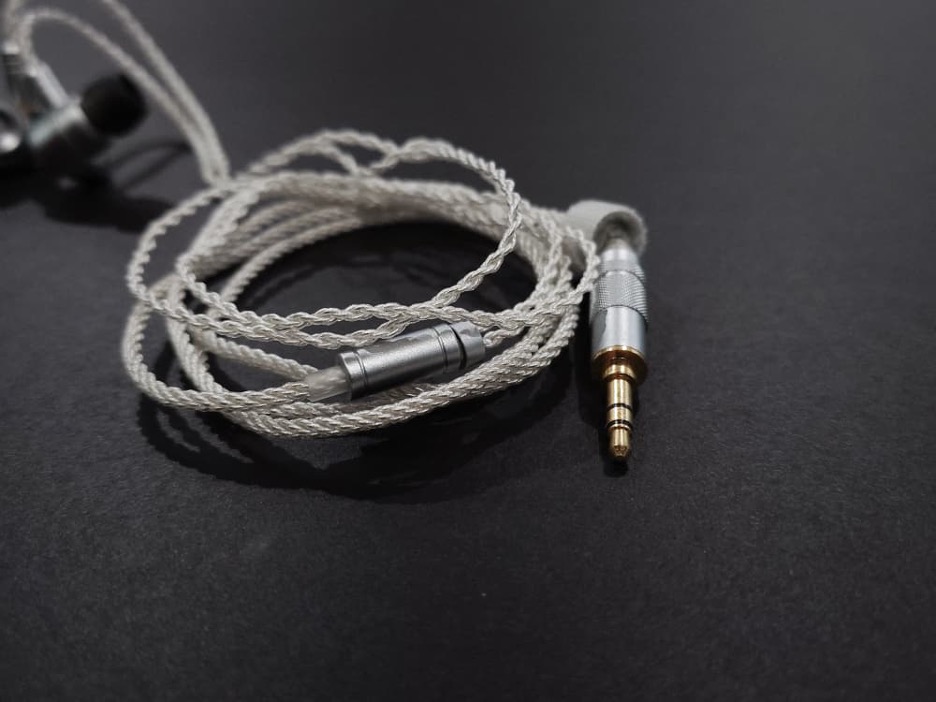
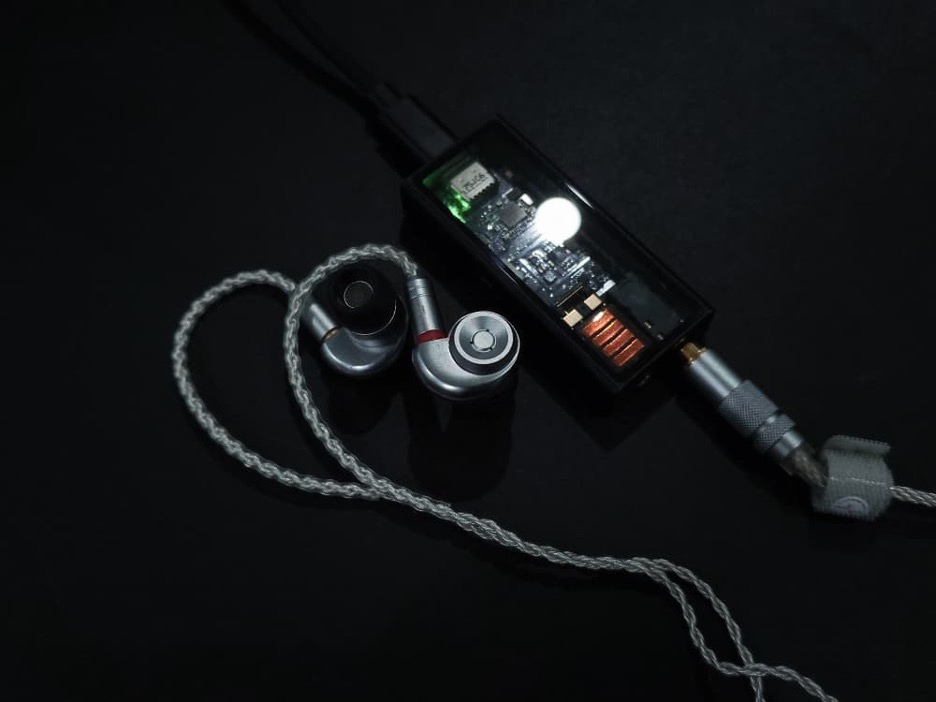
Keeping to the roots of the original T2, the MKIII version came in the exact packaging of the original T2, albeit with a different colour. Upon unboxing, you’ll receive the T2 MKIII itself, a set of generic silicone eartips, a pair of foam memory eartips and not to forget the stock cable as well. Speaking of the cable itself, I am not entirely sure in regards to the material used due to the lack of information but judging from the looks it seemed to be silver-plated copper with 4 cores in total. The cable itself is quite thin, tightly braided and prone to tangling as well, but at least it is free from transmitting microphonics. In terms of connection, the T2 MKIII is only available in 3.5mm single-ended plug and features MMCX connectors the same as the previous T2 versions.
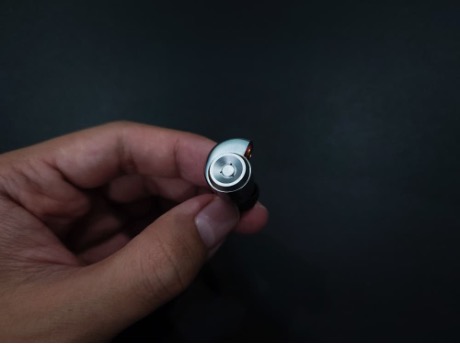
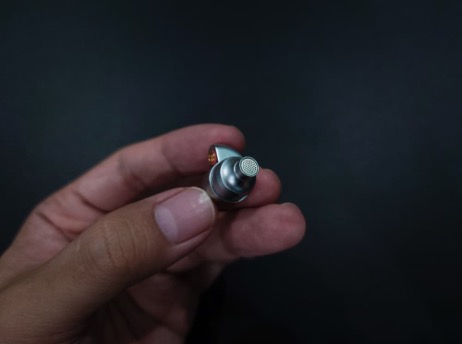
T2 MKIII utilizes lightweight aluminium as with the majority of TinHiFi IEMs, so you can expect it to be very robust, durable and well-made. Overall, the T2 MKIII is comfortable and indeed lightweight. Although the nozzle diameter is on the larger side measured at 6mm hence those with smaller ears may face some difficulties. However, the T2 MKIII can provide excellent passive isolation with the perfect seal. However, I did notice that the T2 MKIII has a driver flex issue which is quite known in their previous T2 models that I have owned in the past. In my opinion, it is quite disappointing to see this issue is still unresolved. A simple tweak to the design such as adding an extra or enlarging the vent hole near the nozzle should eliminate this issue though it may cause some trade-off towards the tuning.
Test Equipment
- Apple Music + Local Hi-Res files via UAPP > Sony Xperia 1 V + DSEE Ultimate (ON), Dolby Atmos (OFF)
- Apple Music + Local Hi-Res files via UAPP > Sony Xperia 1 V > Questyle M15i (low-gain)
- Apple Music + Local Hi-Res files via UAPP > Sony Xperia 1 V > Kiwi Ears Allegro Pro
Specifications
- Driver: 10mm main composite diaphragm dynamic driver + 6mm tweeter
- Impedance: 16 Ohms
- Sensitivity: 102 dB/mW
- Frequency Response: 12Hz-40000kHz
- Cable: 1.2m SPC (Silver Plated Copper), 3.5mm single-ended to dual gold connector MMCX
- Nozzle diameter: 6mm
- Weight: NA
Power Requirement
Rated at only 16 Ohms and with a sensitivity of 102 db/mW, the T2 MKIII is very efficient and easily powered even from low-powered sources (eg; small dongles, smartphones, etc). For reference, my comfortable listening volume is around 56.5 decibels which is quieter than a normal conversation therefore it does not take too much effort to crank the T2 MKIII up to volume optimally.
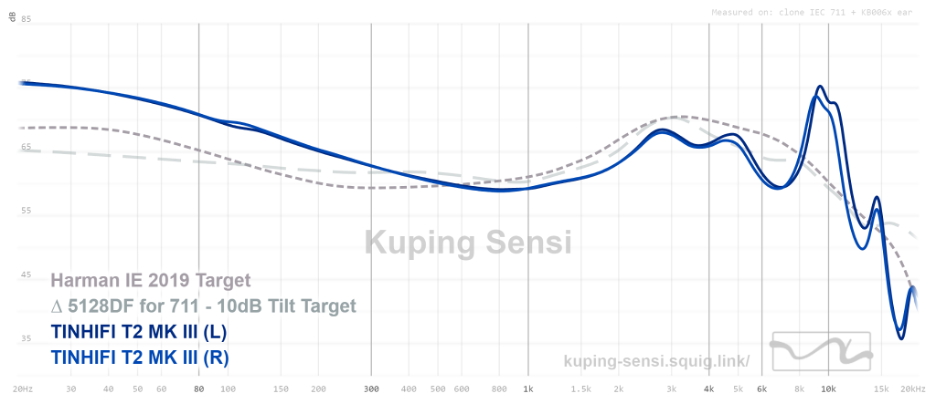
Warm, sub-bass focused pair of IEMs with an exaggerated quantity compared to the rest of the frequencies.
Rumbles and reverberations are immediate but felt rather polite, it may not please those who seek a much vigorous and aggressive sub-bass experience probably due to driver limitation.
Mid-bass resembled a boomy sound meanwhile, the bass slams felt heavy, thick with an exaggerated note weight. Again, very much suited to those who prefer an emphasised bass quantity rather than quality.
Transients/decay such as reverberations sounded slow, similarly to the bass responsiveness which is a tad sluggish.
Mids
- Tonal balance is warm, north to neutral and very rich while midrange quality is smooth and engaging.
- In result, although elements such as both male and female vocals sounded rich and lush. Stringed instruments and percussion sounded slightly veiled due to the added warmth from the lower-mid and sub-bass.
- Clarity is poor within the midrange, vocal textures in grunge tracks such as AiC (Alice in Chains) and deep, throaty voice of Brad Paisley in Whiskey Lullaby sounded blunt and overwhelmingly thick/heavy.
- Timbre is inaccurate due to muddiness from the excessive bass, such as the sound of tapping onto the body of an acoustic guitar sounded dark.
- Upper-mid presence is subdued and free from shoutiness, however vocals sounded a tad behind other elements.
Treble
- On a positive note, the T2 has a good treble presence, it is both sufficiently sparkly and lively. Elements such as hi-hats, crashes and high-pitched violin notes sounded a tad mute due to the overpowering bass. However, it remains quite lively and fairly crisp.
- It can be slightly sharp due to the peaks and dips especially above 4kHz.
- Can be slightly sibilant, pronunciations of s,t, etc are sharp.
- Frequencies over 10kHz are lacking air, which makes the T2 MKIII sound stuffy and muffled.
Technicalities
- Soundstaging is small or I may say below average, while it has average width the soundstage is lacking in depth. Lack of airiness past 10kHz results in a very intimate experience, which can be claustrophobic.
- Spatial imaging was quite sharp and accurate, the T2 MKIII was able to track multiple moving elements at the same time.
- Detail retrieval is good but still within the average realm, it has no trouble rendering large details. However, rendering smaller nuances is rather limited such as subtle bass textures and reverberations.
- Resolution is poor/below average, especially subtle details which sound blurry and masked.
- Separation and layering below average elements melded with each other which gets even severe with busier tracks.
- Dynamic range via Ultimate Headphone Test – ABYSS Headphone. The T2 MKIII scored an average, managing to score only 5 out of 7 bell counts.
Comparison(s)
Tipsy M1
M1 is also superior in all aspects in terms of technicalities.
Slightly more expensive than the T2 MKIII, however the M1 trumps it in almost all categories except the bass frequency which has a different tuning philosophy.
M1 sounded much more neutral and balanced in the bass while still capable of delivering a thick, weighty bass punch. The bamboo diaphragm dynamic driver captures subtle nuances, textures and sub-bass rumbles easily with impressive clarity.
Midrange on the M1 sounded much more natural, neutral tonal balance with terrific clarity and sufficient forward presence in the upper-mids, especially vocals which sounded butter-smooth and alluring.
Timbre is far more accurate which makes it flexible not only for enjoyment, but also for professional usage such as monitoring.
Treble quality on the M1 is also smooth and laid-back in nature however it is far more superior and has a better treble presence and air compared to the T2 MKIII. To add more, the M1 produces a far more crisp, realistic sounding hi-hats and crashes.
Conclusion
The TinHiFi T2 MKIII is a nostalgic trip back to a classic shell design, however the sound signature takes a polarizing turn toward a warm, bass-heavy profile compared to the T2 which I’m familiar with that is clean, reference-like with high clarity sound. While it successfully avoids the thinness or shoutiness, it struggles to maintain the clarity and technical prowess that made its predecessors far more superior.
With a thick, polite bass response and a lush midrange, the MKIII is a safe pick for listeners who prioritize a relaxed, non-fatiguing experience over surgical precision. However, the persistent driver flex issues, a cramped soundstage, and a lack of upper-treble air make it a tough sell for those seeking a modern, more competent performer.
Nevertheless, if you are a basshead and at the same time who values the robust, iconic T2 build and needs an easy-to-drive daily driver, the MKIII might find a spot in your collection. But for the critical listener, the search for a true successor to the original T2’s balanced magic continues.
Additional Test Tracks
Can You Stand The Rain – Boyz II Men 44.1kHz
Money For Nothing (Explicit) – Dire Straits 44.1kHz
A Poem Titled You – TAEYEON 44.1kHz
Anesthetize (Live) – Porcupine Tree DSD256
Vermilion – Slipknot 44.1kHz
Kanade – SUKIMASWITCH 44.1kHz
La vaguelette (Original Game Soundtrack) – HOYO-MiX 44.1kHz
Rhythm – Jamey Haddad, Lenny White; Mark Sherman 44.1kHz
Kimigatame (When Suara Meets DSD 11.2Mhz) – Suara DSD11.2MHz
Just Coolin’ – Art Blakey 192kHz
Automatic – Hikaru Utada 44.1kHz
In My Room – Hikaru Utada 44.1kHz
Colors (Live in Studio) – Black Pumas 192kHz
Timbres – Yosi Horikawa 44.1kHz
Misguided Ghosts – Paramore 44.1kHz