
Disclaimer
- The reviewed IEM is sponsored by ARTPICAL/PALAVOX, I grant my utmost gratitude to Airy from ARTPICAL/PALAVOX for making this review possible. Nevertheless, all opinions remain original ideas, there was zero influence from any 3rd party or external opinions throughout the review.
- No EQ or filter presets were used during the entire sound evaluation.
- Sound evaluation are kept neutral and does not include 3rd party accessories (ie; eartips, cable, reversible mods)
Introduction
After another period of long hiatus, I’ve felt an itch to step back into the audio rabbit hole which I have left my footprint the last time I indulge myself with the latest equipment and IEMs. There’s an urge that I should come back and start writing again, which brought me here to this review for this is what I would consider a special return for myself.
Despite not actively participating about the latest update within the audio community, I have been following quite closely on the development of the lesser known unicorns such as the PALAVOX Steel Heart which was the latest flagship model from PALAVOX, a higher-end independent brand of ARTPICAL. However, I was also interested in their more affordable offerings such as the ARTPICAL Lunar Ring due to the uniqueness of the design that looks like nothing else out there (Acoustune-level of oddity), the creativity that was placed behind the design and the technology that was implemented into the IEM.
As it happens, the ARTPICAL Lunar Ring was in fact designed to be inspired by the silver obsidian. In some beliefs, silver obsidian carries a powerful self-mirroring and clearing mental blocks and clutters which somehow felt relatable to my situation. Therefore, I decided to reach out to ARTPICAL and thanks to their cooperation, they’re willing to sponsor a unit of the ARTPICAL Lunar Ring for a review. The Lunar Ring retails around $430 (RM1,791.00) brand new, excluding shipping from CN. Hence, huge shoutout to ARTPICAL/PALAVOX for making this review possible and hope it’ll be a meaningful sharing onwards.
Unboxing Experience
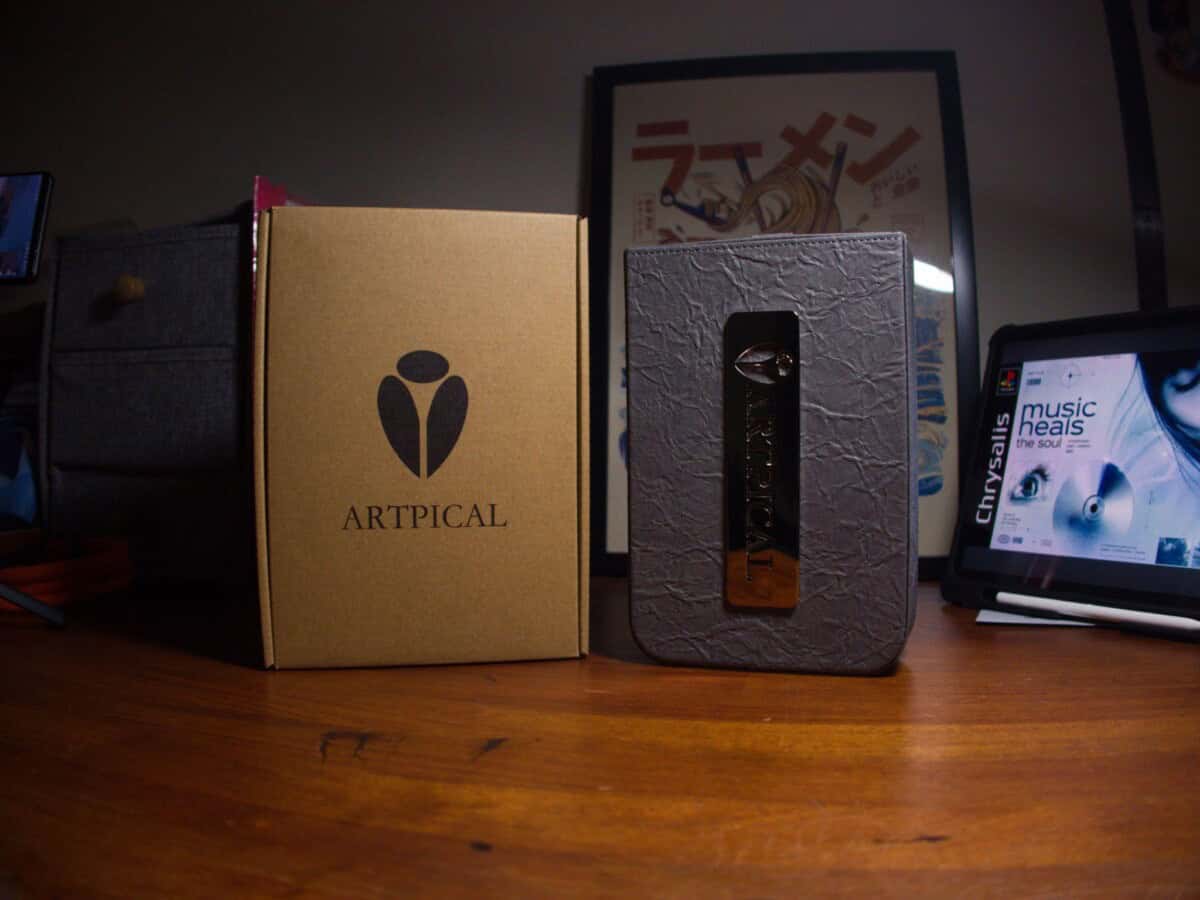
Compared to other IEMs by ARTPICAL, I could say that the Lunar Ring might have some of the most mature aesthetics in terms of product presentations behind its more premium sibling, Blue Planet. It features a faux leather packaging that mimics the texture of a crocodile skin, complimented with a soft velour fabric inside the box and around the tray which also contributes to a satisfyingly smooth unboxing experience.
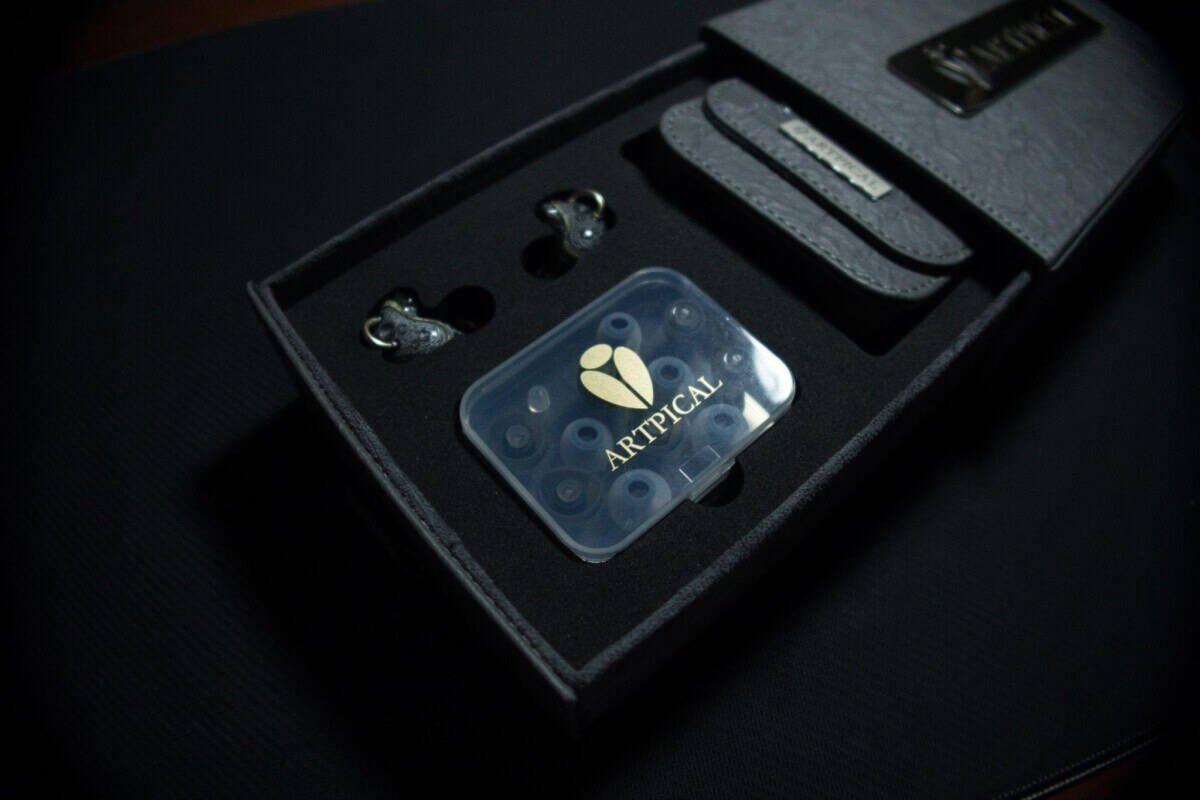
Arranged neatly inside the packaging you’ll find the Lunar Ring itself which is already pre-installed with a pair of ARTPICAL’s Slime Liquid Silicone eartips, alongside that there’s also an eartip container with extra two sets of generic silicone eartips. Additionally, there’s a faux leather case included that features the same faux leather as the one on the packaging and stored inside is the stock cable for the Lunar Ring which we will dive into much deeper soon.
Specifications
Driver: 1 PU+LCP diaphragm dynamic driver, 1 Knowles balanced armature, 2 micro-planar diaphragm driver
Impedance: 12.2 Ohms
Sensitivity: 108.5 dB/mW
Frequency Response: 20Hz-40kHz
Cable: 1.2 meter, 2-pin (0.78mm) to 4.4mm balanced connector
Nozzle size: 6mm
Build and Comfort
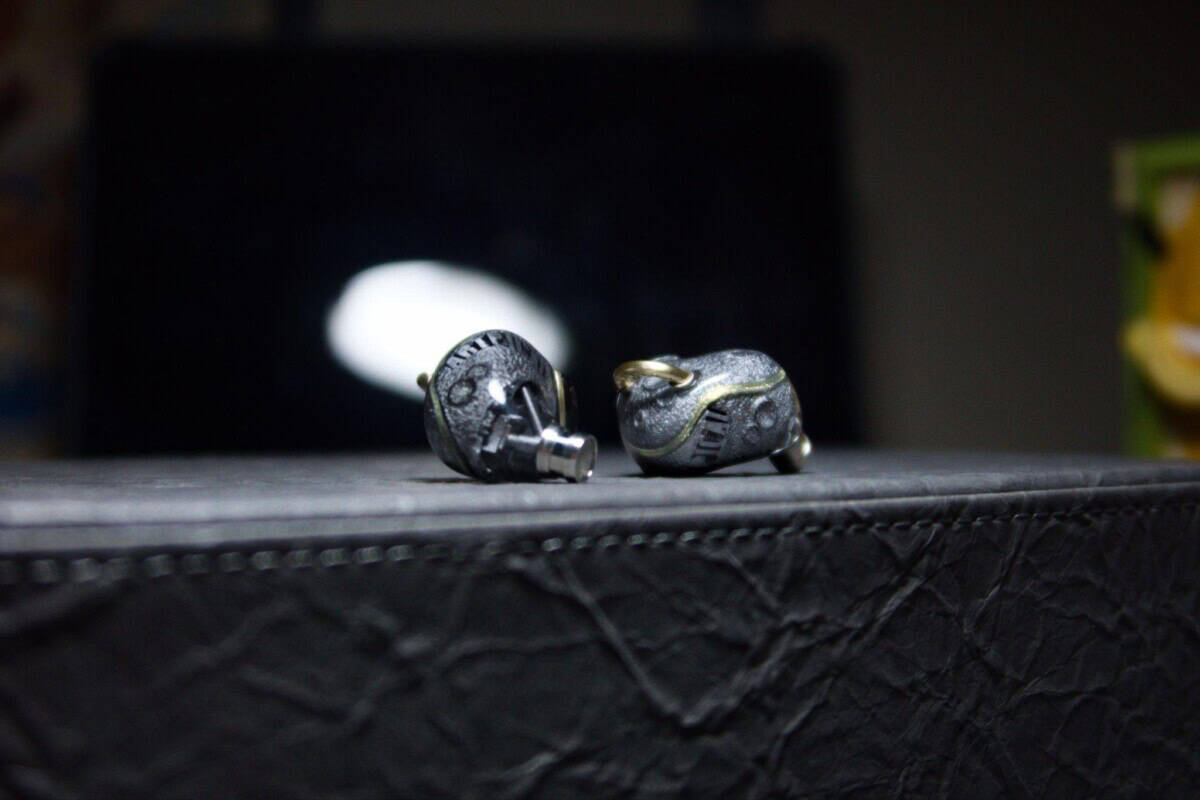
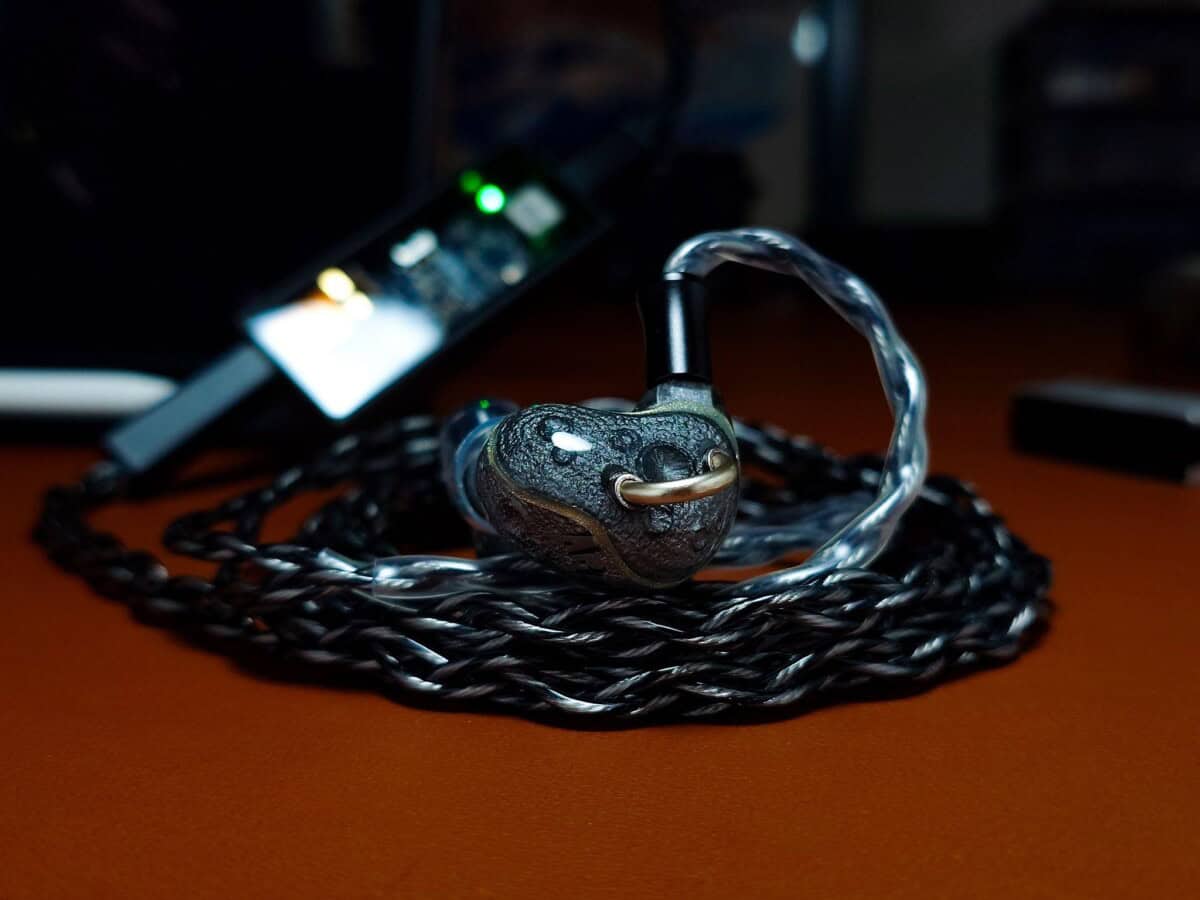
ARTPICAL Lunar Ring is definitely the kind of IEM that you will have to see and hold in person to truly appreciate the effort in designing and crafting each pair of Lunar Ring. To achieve the detailed lunar landscape-inspired artwork, SLA/MSLA or also known as stereolithography printing via liquid photopolymer resin is utilised to produce an astoundingly detailed 3D model. Then, finished with a coat of premium clear resin, cured, smoothed and polished to perfection.
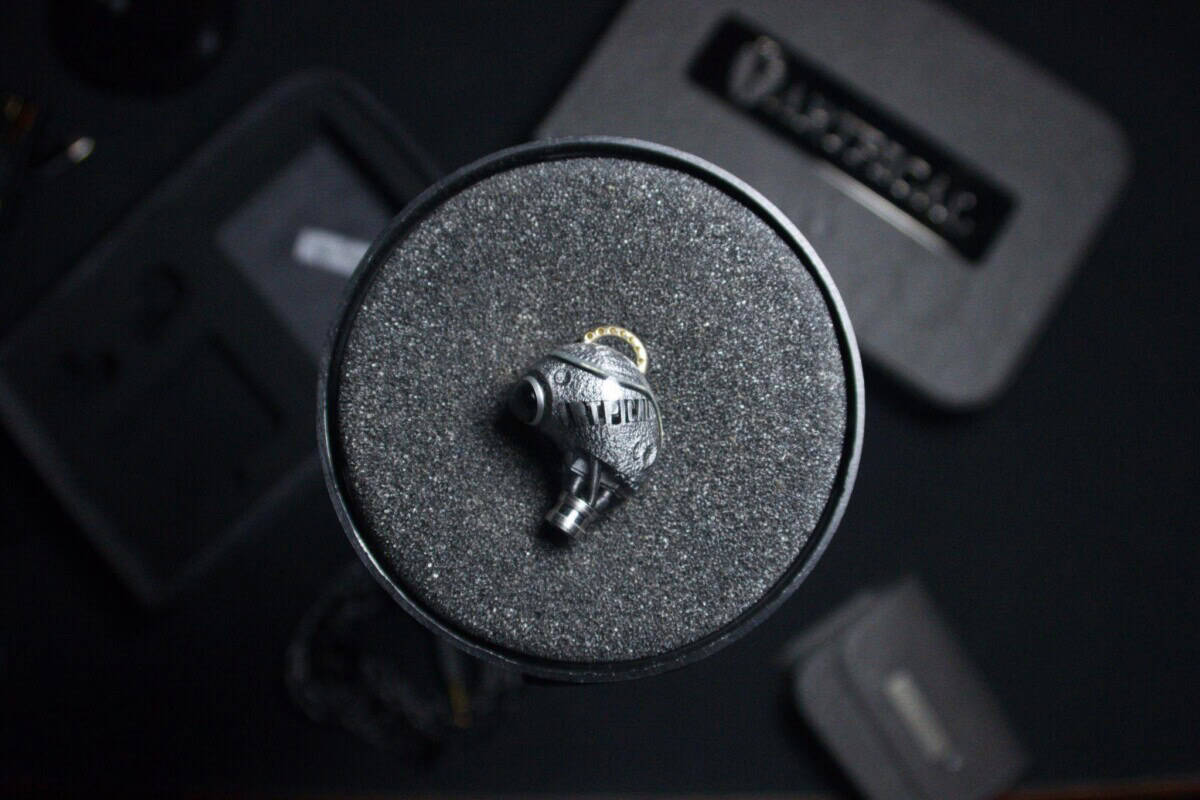
At the heart of this IEM, is a combination of 1 PU+LCP diaphragm dynamic driver, 1 Knowles balanced armature, 2 micro-planar diaphragm driver. Despite the intimidating appearance and size, the Lunar Ring was actually very comfortable to wear for my ears’ structural shape and it does not weigh as much as I initially imagined it. The overall ergonomics were excellent due to the shape and the IEM just wears really nicely and snug inside my ear canal, even with exaggerated movement the IEM does not fall from my ears nor break its seal although this is also taking consideration of the eartips. This provides a more consistent listening experience and passive isolation which I find also great on the Lunar Ring, although some might question its interference with the ventilation metal ring.
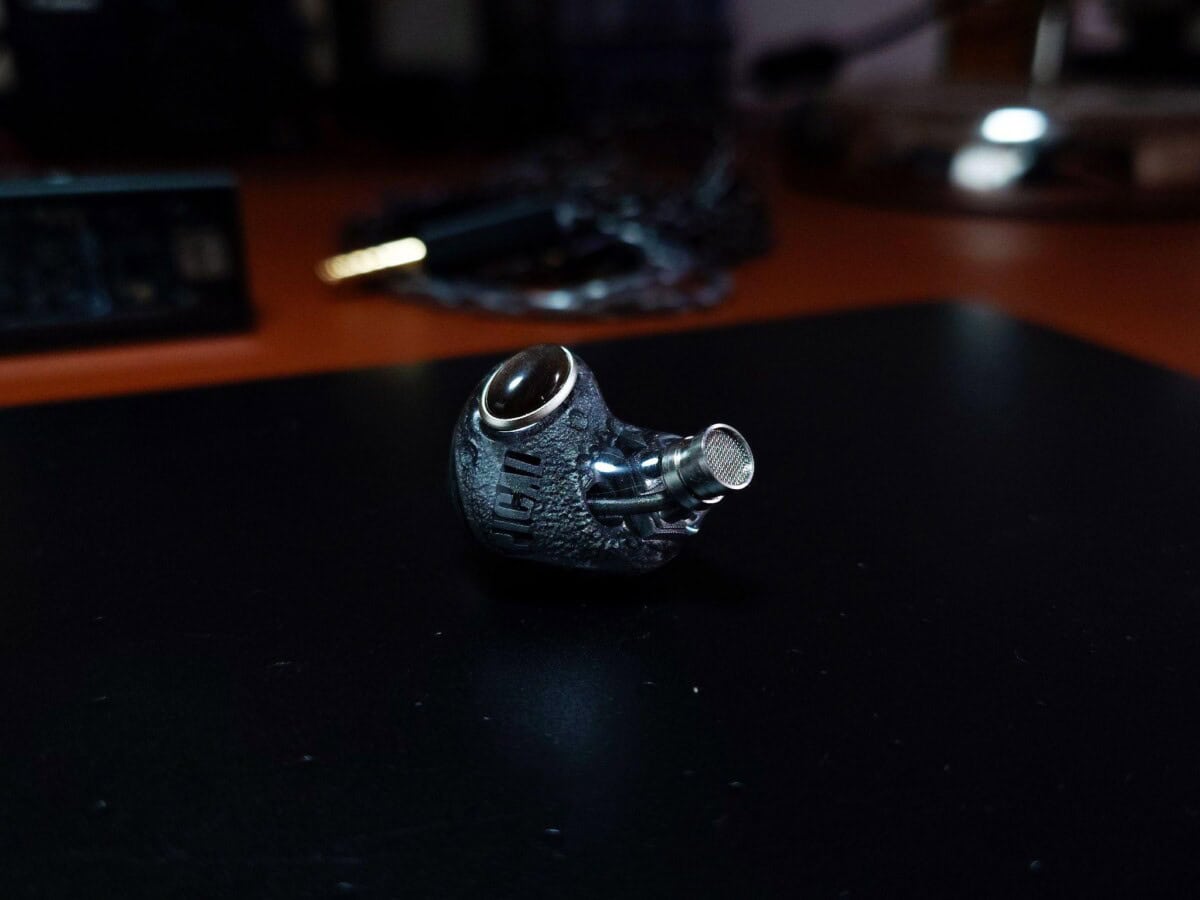
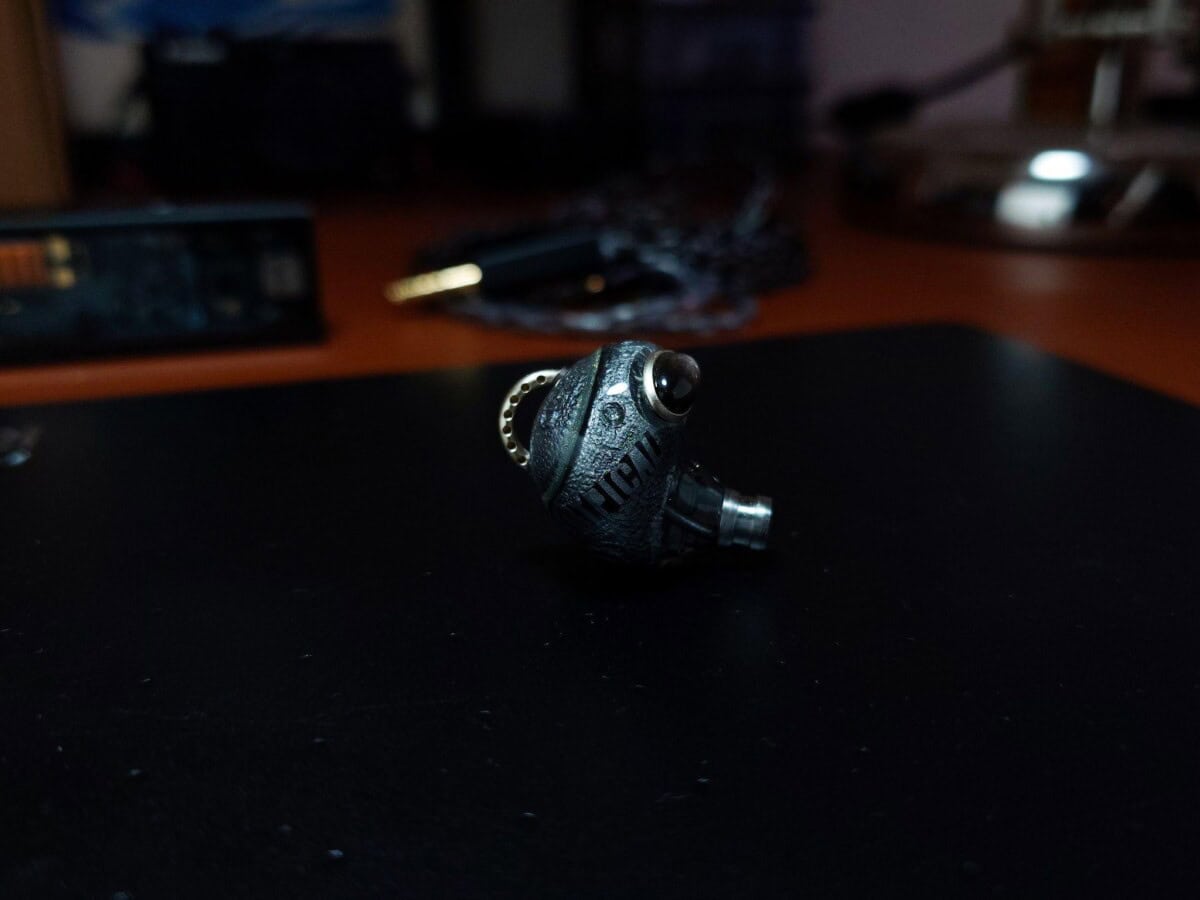
Interestingly, the metal ring which is also the unique selling point of the Lunar RIng is inspired by the lunar eclipse phenomenon. Furthermore, it functions more than just an aesthetic value, as the metal ring also serves as a pressure vent like in most IEMs, to prevent built-up pressure inside the cavity and cases such as driver flex, a common challenge when handling dynamic drivers.
Cable
The stock cable included with the Lunar Ring features a 4 core braided cable with dual pin (0.78mm) connectors which ARTPICAL does not specify in their official website of what material they use for the cable. That said, we can see ARTPICAL went for a two tone black and silver appearance to match the overall aesthetic and vibe of the Lunar RIng.
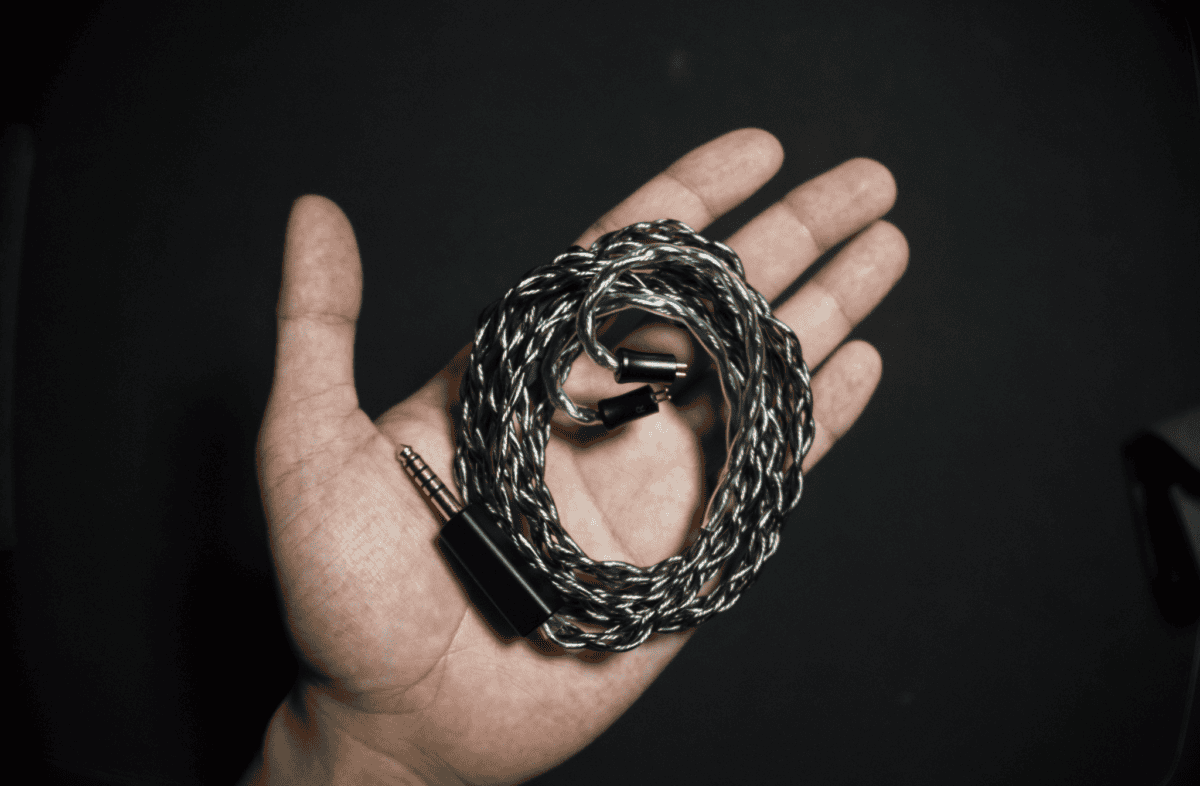
Upon touching the cable for the first time, the cable felt substantially heavy and exuded high quality, premium build which is expected from the premium price tag. The outer PVC sheathing of the cable feels smooth and soft without feeling sort of tacky, this allows the cable to be highly manageable for storage. All of the connector casings are made with metal and finished with a matte look, one component of the cable that feels really satisfying to me was the Eclipse-inspired Y-splitter. The sliding mechanism felt buttery smooth, providing a small yet tactile, satisfying feedback towards the user. Unfortunately, the stock cable does only come in 4.4mm balanced connection and no swappable options, therefore tapping into the aftermarket is the only option if connection flexibility is your priority.
Test Equipment
- Local Hi-Res files > Astell&Kern SE100 M.Chat (Linear Phase Fast Roll-off Filter)
- Tidal (Master) + Local Hi-Res files via UAPP > Sony Xperia 1 V > Questyle M15 (4.4mm)
- Tidal (Master) + Local Hi-Res files > Sony NW-WM1AM2 (4.4mm)
Power Requirements
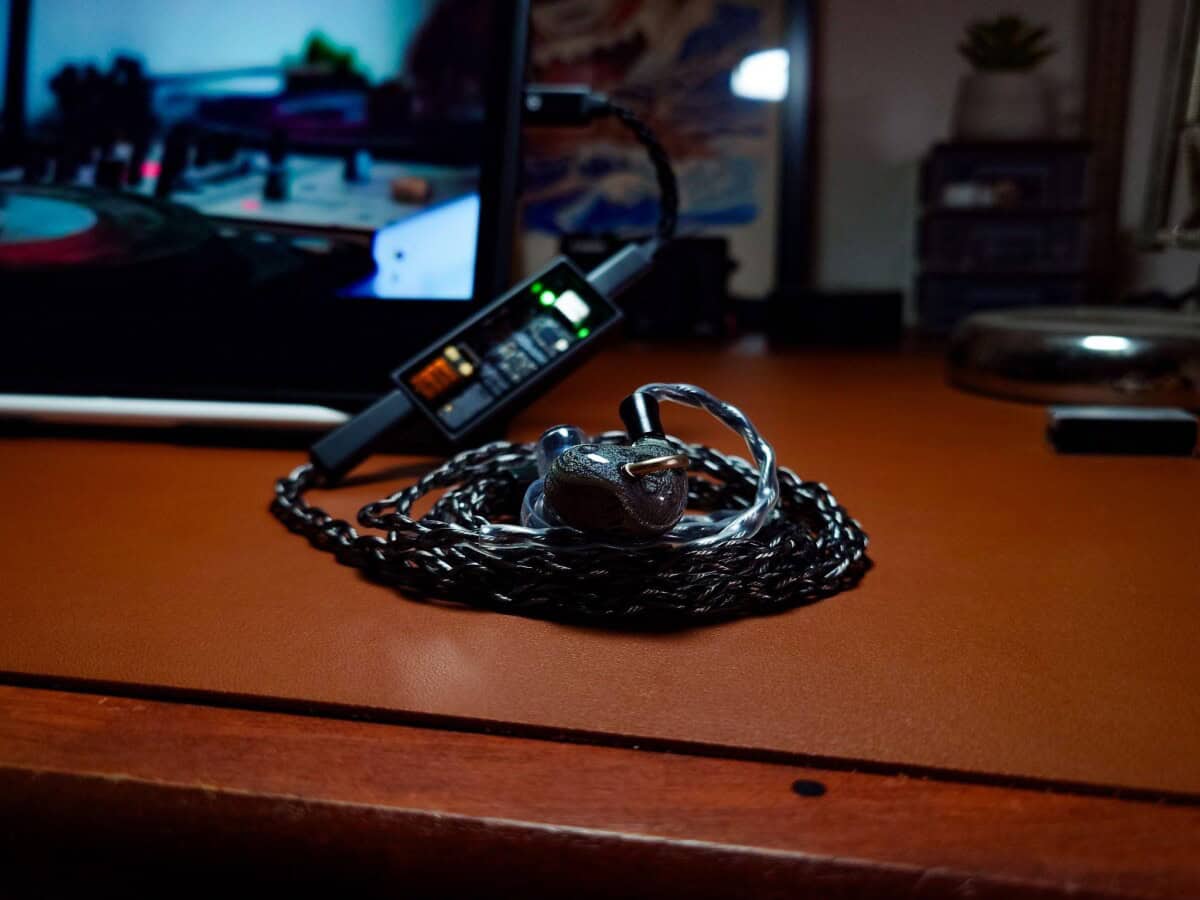
Despite having multiple drivers inside the enclosure, the ARTPICAL Lunar Ring surprisingly managed to achieve an efficient 12.2 Ohms of impedance and 108.5 dB/mW of sensitivity. Pairing it with portable dongles such as the Questyle M15 was enough to supply an ample amount of power even in low gain mode. However, switching to a much more powerful source such as the Sony NW-WM1AM2, I could hear that the dual MPD drivers offer a slight more brilliance and air in the treble.
Sound Impression
The ARTPICAL Lunar Ring has undergone burn-in phase for at least 48 hours prior to sound evaluation. Throughout the analysis, I paired up the Lunar Ring with a neutral source, the A&K SE100 on Linear Phase Fast Roll-off Filter chosen given that it’s the most natural sounding filter compared to default and the pre-attached ARTPICAL Slime Liquid Silicone eartips are set as default throughout the sound evaluation. Bonus test tracks used can be found down at the end of this review.
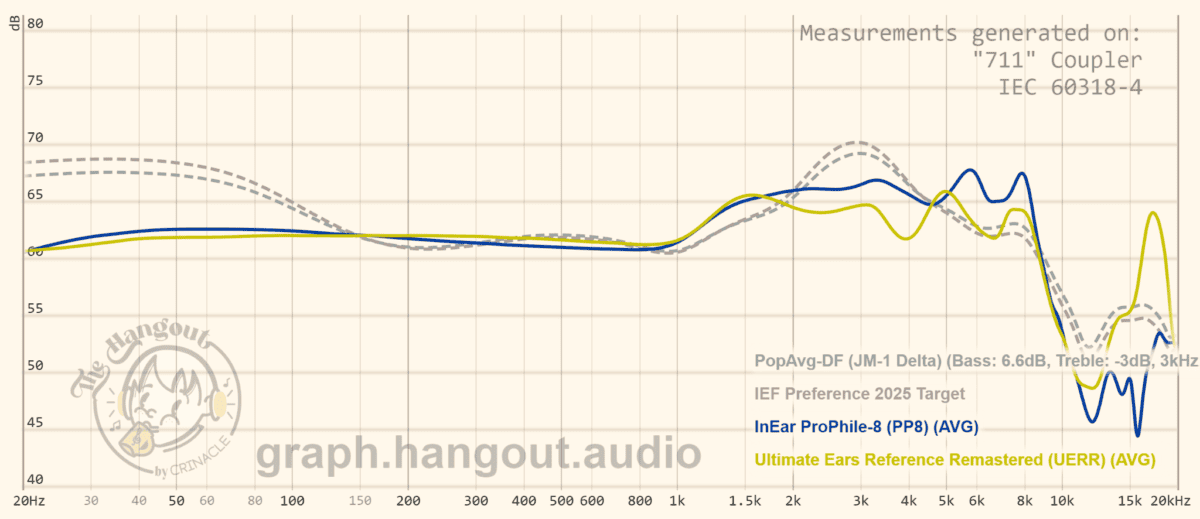
Figure 1: Frequency response for my preferred sound signature through various IEMs, courtesy of hangout.audio.
My sound preference is always reference-flat tuned or with a very slight warmth which you could find in IEMs such as the Vision Ears VE7, Plunge Audio Unity Stage or the InEar Prophile 8.
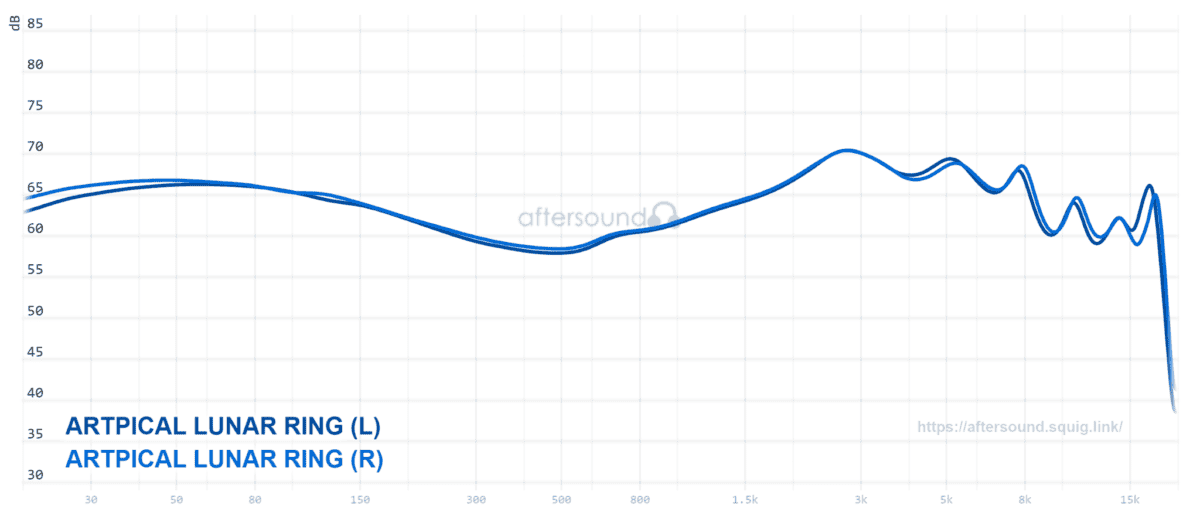
Figure 2: Frequency response for the ARTPICAL Lunar Ring, courtesy of Aftersound.
The ARTPICAL Lunar Ring is a take on a V-shape approach based on the Harman In-Ear 2019 target curve, with a generous amount of mid-bass and the same as well for the higher frequencies. However, the lower midrange is slightly lower than the target suggests which does translate to a rather slightly thinner midrange. The overall response is more oriented towards the higher frequencies past the lower midrange, therefore the sound profile is skewed slightly coloured towards the brighter, analytical side. That said, the bass still provides sufficient warmth and weight for the instruments and percussions, midrange sounded energetic and detailed thanks to the upper mid and a treble that is crisp, sparkly and airy with impressive clarity.
Low Frequency (Bass)
There’s a healthy amount of low-end on the Lunar Ring, presence is well-balanced between sub-bass and mid-bass to give kick drums, bass guitars and double basses enough weight and warmth. It doesn’t try to be the star of this IEM, but more like a supporting role, adding a layer of depth into the sound. Deep sub-bass rumbles and reverberations from tracks such as Hollow (16 bit Remix) – Björk, felt immersive and were crystal clear in terms of clarity to render the rumble notes in a subtle, polite manner rather than aggressive and without any muddiness or sluggishness although I do wish I could hear and feel more resolution from the texture of the bass.
To my ears, mid bass on the Lunar Ring has a slight boomy, wooly character and each bass slam resembles a thick thump with slight elasticity, thanks to the PU and LCP material used for the driver diaphragm. It checks most of the qualities that I would consider from a dynamic driver or hybrid setup IEM for my own enjoyment, although if I have to nitpick I’d personally prefer a more controlled and tighter bass response. Don’t get me wrong though, the Lunar Ring is still a very competent IEM, especially if you like a much softer, more musical approach into your music without sacrificing technical quality such as bass speed and decay which to me the Lunar Ring excels at both. The 8mm dynamic driver responds fast, delivering a rapid and accurate transient while the acoustical design provides the perfect amount of room to take away some of the excess reverberations, thus delivering a clean sounding low frequency.
Middle Frequency (Mid)
One of the best qualities I could point out, regarding the Lunar Ring’s midrange, is how satisfying this IEM can make stringed instruments sound due to the emphasised upper midrange. Each plucking and picking on the string has a strong bite, without sounding tizzy nor edgy. However, that said I do personally feel that vocals are slightly thin and lacking note weight, which are the most obvious when listening to country genres, etc.
Even if I had to pick a specific singer like Sade Adu, who is well-known for her warm, silky and alluring vocals could sound noticeably thin from the Lunar Ring and the same thinness does also affect stringed instruments violins, acoustic guitars and etc., again by a noticeable amount. Nevertheless, the rest of the midrange deserves praise, it sounds clean with great clarity picking up small nuances in vocal change. Elements within the midrange sounded forward as well due to the emphasised upper mid, especially vocals which are pushed into the center of the spotlight.
High Frequency (Treble)
Treble on the Lunar Ring for me personally is somewhat a mixed bag reaction after a full week of listening and testing with various types of applications, not only restricted to music. Starting with the positives, having planar as the choice for the treble does give the Lunar a really crisp, impressively airy and very lively presence and sparkle coming from hi-hats, crashes and etc,. Tambourines for example in Ignorance (Acoustic) – Paramore sounded very lively, every jiggle sounds crisp and well-rendered due to the 5kHz peak which further elevates the presence of the tambourine but not in a way it overshadows other elements inside the track. Meanwhile, the elevations past 10kHz gives the Lunar Ring a really good sense of airiness, a feeling of spaciousness and a slightly delayed tail. Additionally, being able to listen to my Chinese playlists comfortably for long hours also confirms that the Lunar Ring is safe from sibilant.
Now, due to the Lunar Ring using two micro-planar drivers (MPD) on each side, it can be difficult to really tune MPD to sound natural and unfortunately the Lunar Ring is unable to do so. To me, it does sound a bit shrill and overall lacking vibrancy, therefore even though I praise how the Lunar Ring renders the sound of tambourine so lively, but at the same time it lacks that fullness and it sounded rather tinny. Nevertheless, I could see that the Lunar Ring will pair excellently with a warmer, fuller analog sounding solid-state, etc., which will certainly mediate the thinness well.
Technicality
Soundstaging is spacious and horizontally wide while slightly has less depth, the integrated metal ring pressure vent design helps reverberations dissipate naturally and blends well with the elements. Almost as if I’m wearing an open-back IEM, although I could still hear a slight feeling of constraint within the soundstage. Spatial imaging is quite good with each element separated moderately clear and there’s a decent amount of space between each position within the stage. The gaps between each element aren’t really well pronounced like how you’d hear from a much technical-sounding IEM but the imaging is nevertheless commendable even with complex tracks.
Detail retrieval on the Lunar Ring to me sits comfortably within above average realm, it could render a lot of information from large details to small nuances, quite easily although the bias is skewed slightly more in favour towards the lower mid until treble, be reminded as well that this is also can be due to the capabilities of the driver itself. Meanwhile, resolution on the Lunar Ring is average at best and most of it was largely detailed only at the initial impression. For example, in one of the mentioned songs Hollow (16 bit Remix) – Björk, I could hear and feel the initial sub-bass rumble. But as it transients quieter, I couldn’t feel much of the sub-bass texture and same goes with other parts of the frequencies too.
Both layering and separation on the Lunar Ring is solid, despite being slightly lacking depth in the soundstaging, I could still hear primary elements such as lead vocals and primary instruments occupying the forward row and other supporting elements such as percussion and ambience occupying the row of layers in behind. Separation wise, the Lunar Ring managed to place vocals as the highlight in the center of the soundstage. Even on busier tracks, vocals remained anchored in the middle and sounded clear, free from being congested by the elements happening around the main highlight.
Lastly for the dynamic range test, the ARTPICAL Lunar Ring received a score above average. Utilizing the Ultimate Headphone Test – ABYSS Headphone dynamic range test as a reference. In short, a sample sound of a drum and a bell are played simultaneously as much as 7 counts, but only the sound of the bells will become quieter. Hence, from a scale of 7 counts, Lunar Ring was able to produce an audible 6 out of 7 counts.
Comparison(s)
Tanchjim SODA
Although the SODA is only equipped with two driver hybrid of DD and balanced armatures, it is significantly more resolving, reference-like tuning and aggressive sounding compared to the Lunar Ring. Everything sounded much more intentional, bass delivery has a much more immediate attack, combined with a stronger, thicker and tighter bass slam. Sub-bass rumble and reverberations feels stronger and reaches far deeper.
Midrange on the SODA sounds more forward and lush, although it does come with a cost considering it has an emphasised pinna gain. Therefore, I do feel that in terms of comfort and musicality, the Lunar Ring provides a more comfortable, long hours of music listening pleasure compared to the SODA. Meanwhile, in the treble region the SODA appears much brighter and does promote fatigueness much quicker compared to the Lunar Ring. It presents almost similar quality of technicality with the Lunar Ring albeit the SODA has more resolution. Having said that, the spacious soundstaging, overall detail retrieval, layers and separation on Lunar Ring is just a step above the SODA.
Eartip Combination(s)
Easily one of my preferred eartip to pair with the Lunar Ring. Overall, the Coreir provides a darker/blacker background to the sound which improves the midrange clarity by a comparable degree, I could hear smaller nuances across all ranges better and slightly improved resolution as well. Bass sounded much tighter, more controlled and the attack felt much more immediate and a touch more aggressive although I do have to trade a bit of the elasticity from the mid bass. There’s slightly less airiness compared to the stock ARTPICAL Slime Liquid Silicone but in return I receive better clarity, same crisp, sparkle and most importantly a slightly fuller treble.
Works almost similar to the stock ARTPICAL Slime Liquid Silicone though a bit more refined bass quality, such as you’d still get to keep the elastic bass but now the mid bass is a tad more tighter and controlled. Midrange remained similar to no difference and moving upwards the treble does sound a bit more fuller but slightly less sparkle with the Sonic eartips.
Purchasing Links and Where to Get?
- PALAVOX/ARTPICAL official website
- PALAVOX/ARTPICAL AliExpress store
https://a.aliexpress.com/_mKuzmQB
Conclusion
In conclusion, the ARTPICAL Lunar Ring stands out as a remarkably well-crafted tribrid IEM that successfully balances art and audio engineering. From its visually striking, lunar landscape-inspired resin shell and ergonomic comfort to its efficient driver configuration, it delivers an impressive package both aesthetically and functionally. Sonically, it strikes an engaging, versatile sound profile, offering a bright, analytical presentation rich in detail and air while retaining enough bass warmth to stay musical and immersive. For listeners seeking a distinct IEM design with strong technical performance and high clarity in its class, the Lunar Ring proves to be a compelling option.
Additional Test Tracks
Can You Stand The Rain – Boyz II Men 44.1kHz
Money For Nothing (Explicit) – Dire Straits 44.1kHz
A Poem Titled You – TAEYEON 44.1kHz
Anesthetize (Live) – Porcupine Tree DSD256
Vermilion – Slipknot 44.1kHz
Kanade – SUKIMASWITCH 44.1kHz
La vaguelette (Original Game Soundtrack) – HOYO-MiX 44.1kHz
Rhythm – Jamey Haddad, Lenny White; Mark Sherman 44.1kHz
Kimigatame (When Suara Meets DSD 11.2Mhz) – Suara DSD11.2MHz
Just Coolin’ – Art Blakey 192kHz
Automatic – Hikaru Utada 44.1kHz
In My Room – Hikaru Utada 44.1kHz
Colors (Live in Studio) – Black Pumas 192kHz
Timbres – Yosi Horikawa 44.1kHz
Misguided Ghosts – Paramore 44.1kHz