
With the recent influx of ChiFi brands, new names appear frequently. Twistura has managed to stand out, however, by consistently delivering complete packages of remarkable quality. Models like the D Major, Sigma, and flagship Woodnote have offered refined sound and overall execution that punches above their price. Now, to begin 2026, Twistura is introducing its new flagship, the Beta and priced at 119USD, the Beta is positioned as a flagship yet carries a relatively accessible price tag. At its core lies a new-generation flat glass diaphragm dynamic driver, promising a level of clarity described as “glass-like” sound character aimed at setting it apart from conventional dynamic drivers. How does the Twistura Beta actually perform? Let’s find out.
A huge gratitude to the team of Twistura for the opportunity and we are not affiliated with Twistura and have received no monetary compensation. Our assessment will reflect our honest, opinionated perspective.
Functions & Specifications
Before we start the review, here are the specifications of the Twistura Beta;
- Cavity material: CNC aluminum alloy
- Driver: 11mm dual magnetic dual cavity dynamic driver
- Diaphragm : Planar Glass Composite Diaphragm
- Sensitivity: 124dB/Vrms(@1kHz)
- Impedance: 24Ω±15%(@1kHz)
- Frequency Response Range: 8Hz-21kHz(IEC61094,Free Field)
- Cable: Oxygen-free copper
The Twistura Beta can be purchased directly from their official store as well as other platforms around the globe.
Packaging & Accessories
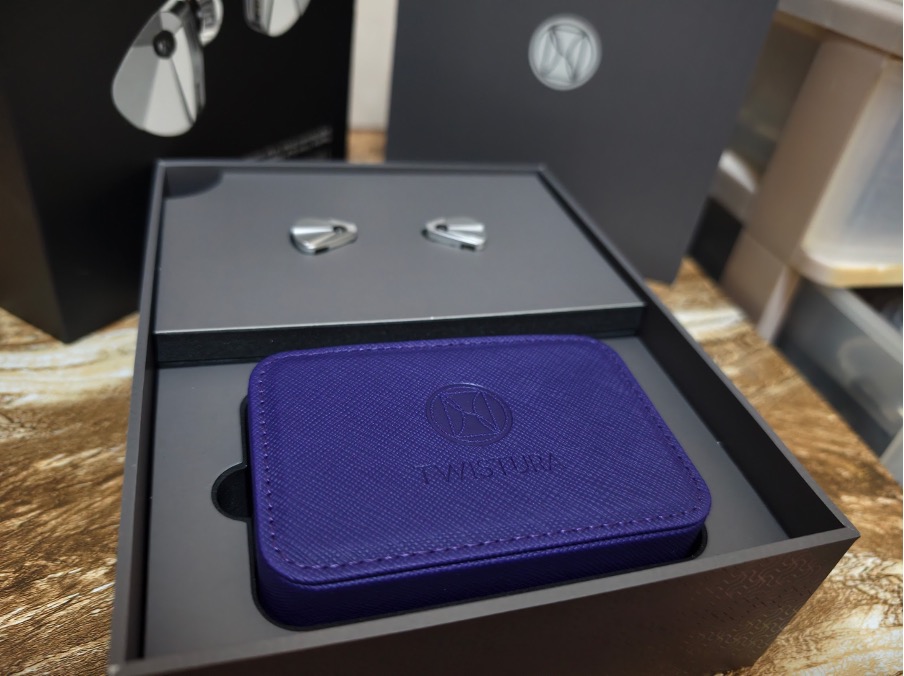
The packaging is nothing but perfect in my opinion and fit for a king. The packaging is similar to the slightly pricier WoodNote and they are lavishly packaged with high quality accessories rivalling products that cost way more than them.
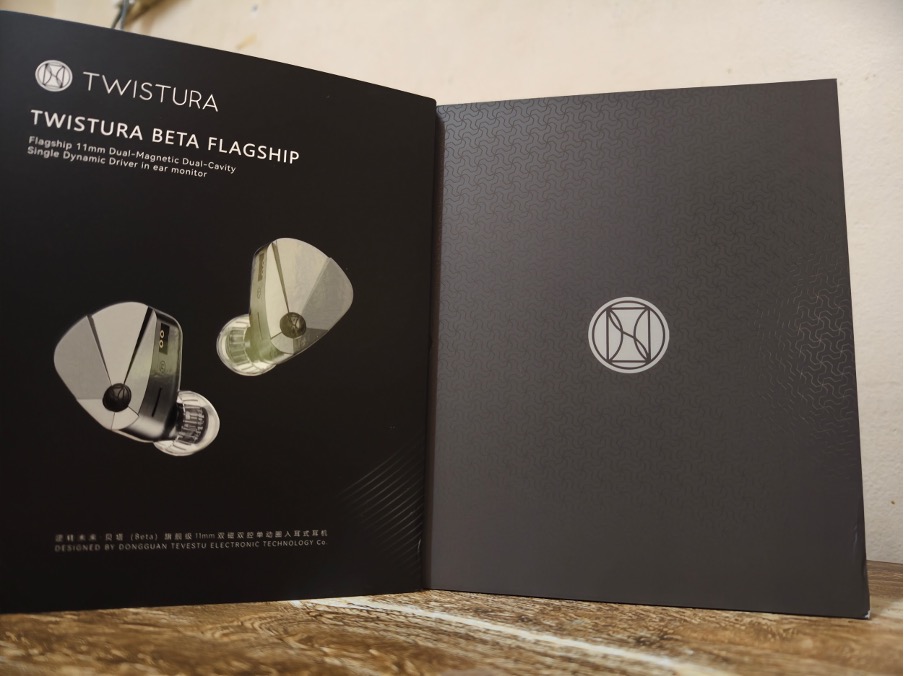
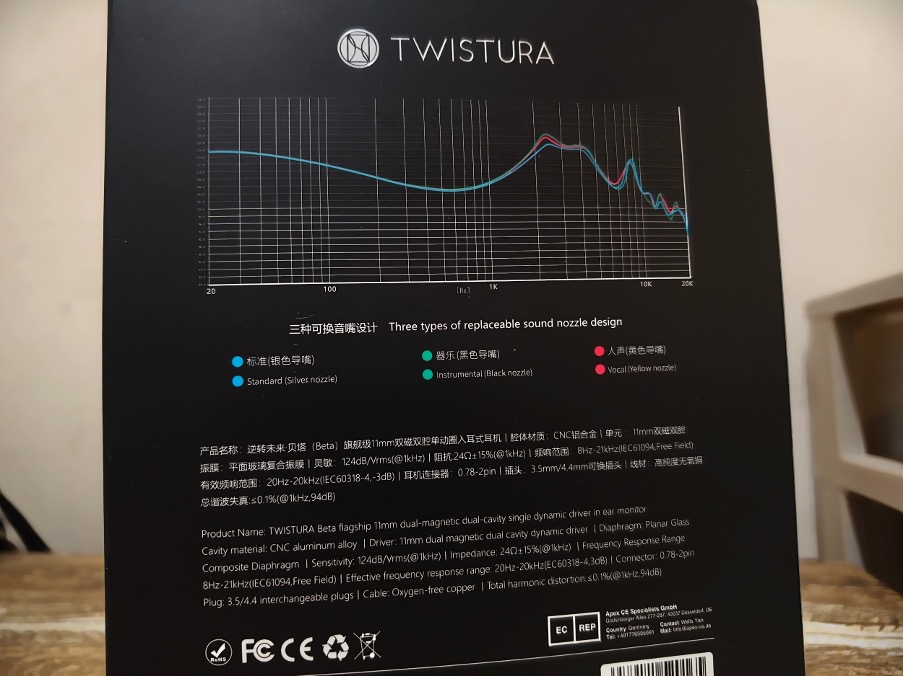
The package includes;
- Carrying Case × 1
- Beta Units × 2
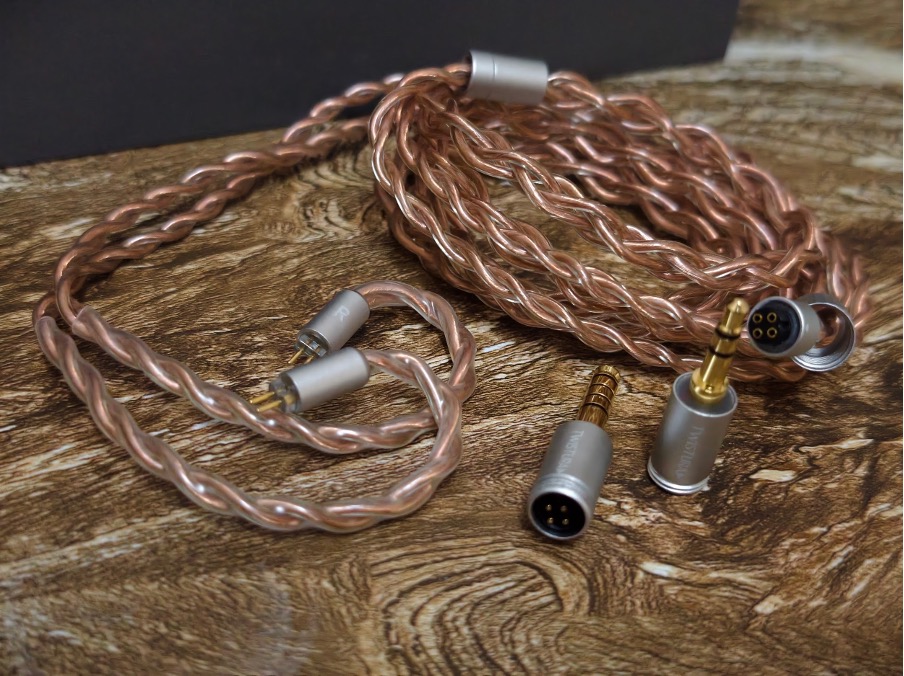
- Earphone Cable × 1
- Interchangeable 3.5mm & 4.4mm Plugs
- Ear Tips (3 pairs) × 3 sets
- Interchangeable nozzle(3 pairs )× 1
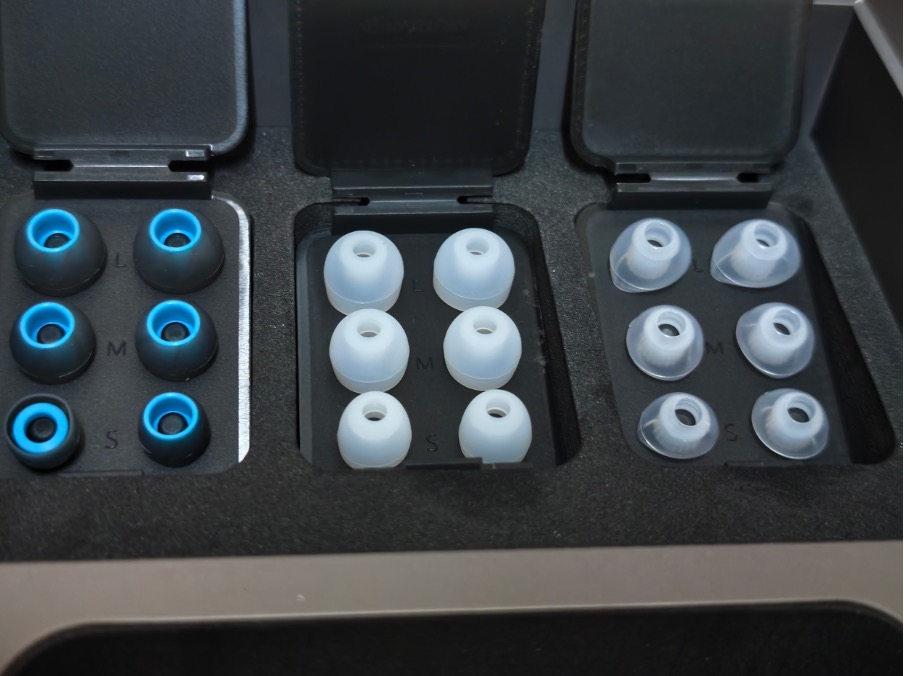
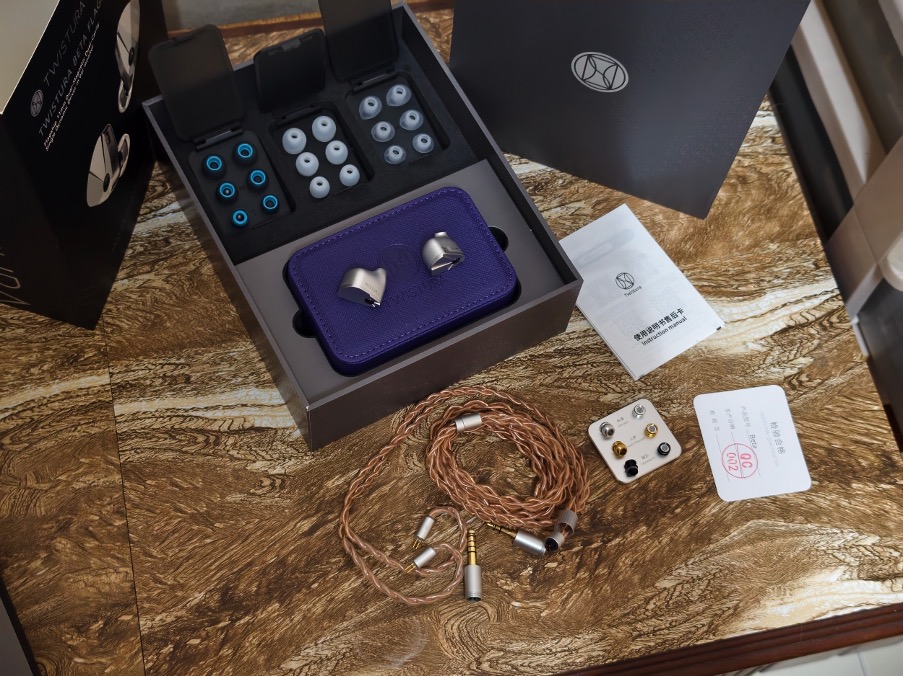
The eartips come in 3 separate cases with a whirlwind type eartips, a generic narrow bore eartips and Twistura’s own Star eartips. The nozzles are placed in a solid metal holder and the IEM case is the usual, high quality leather case named Lingxi.
Design
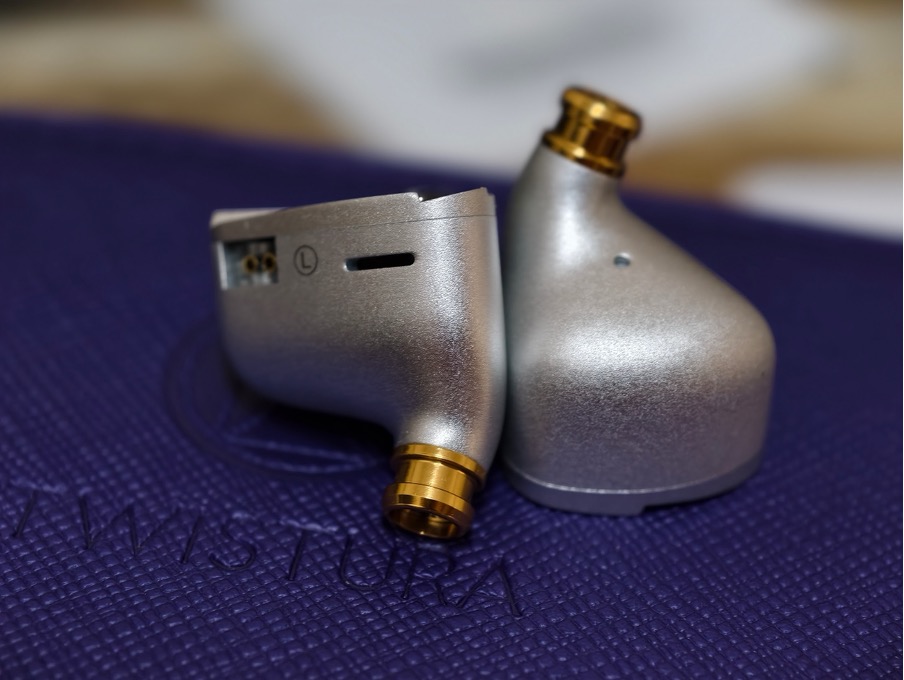
The design is rather simplistic and industrious with a 5 axis, CNC aerospace aluminum alloy that is precision cut with a texture that makes light reflect uniquely and it feels well made with a robust feel on hands. The texture of the shell is matte and there is a tiny badge of Twistura brand on the faceplates. It is lightweight and although there is some edge on the faceplates, they do not interfere with the comfort. The size is quite thick, thicker than the WoodNote but still fits ergonomically.
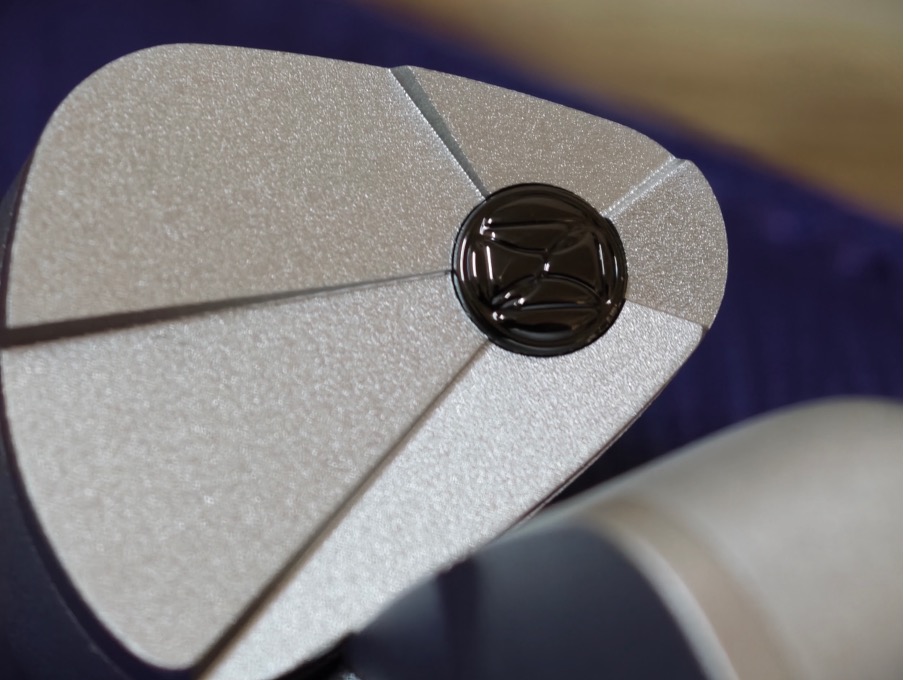
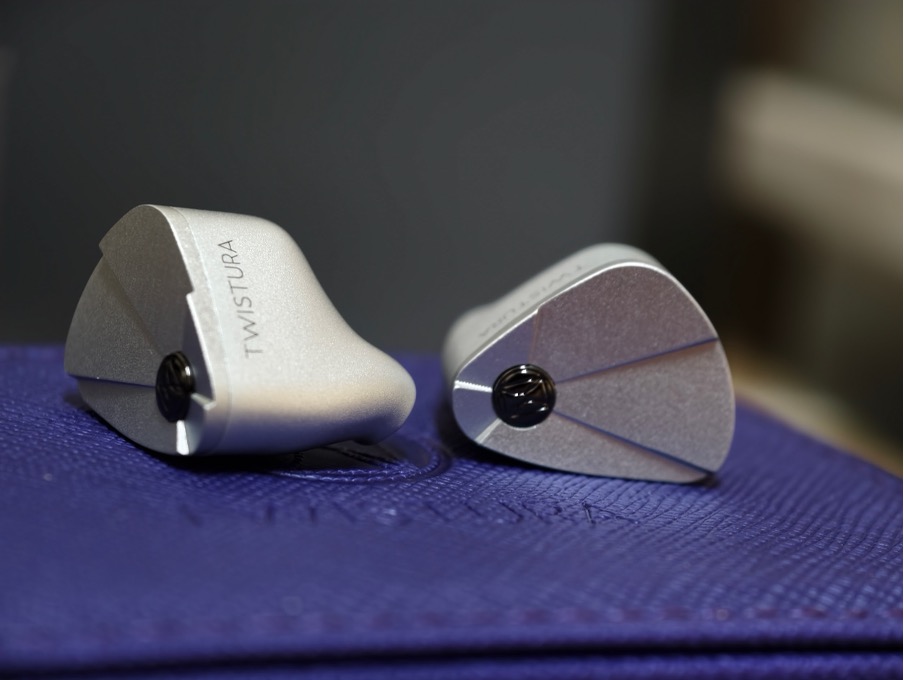
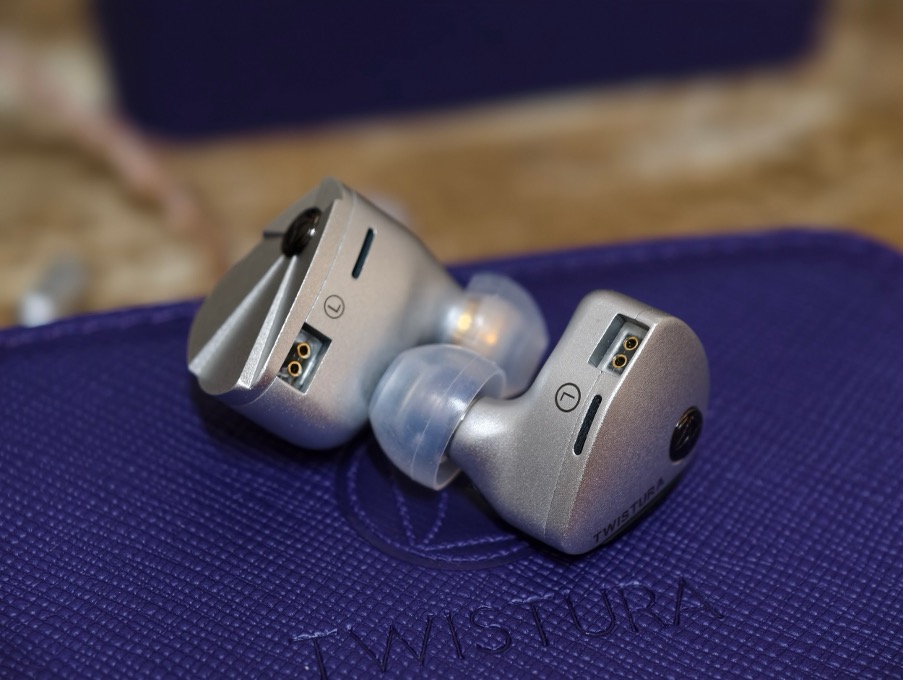
Left: Beta, right: WoodNote
Driving the Beta is a newly developed 11mm micron scale planar(flat) glass diaphragm that has dual magnetic that increases the magnetic flux for a solid, powerful sound. The drivers are housed in a dual cavity design that lets the drivers breathe to maximize the driver performance and the inner cavity has been treated to suppress unwanted resonance.
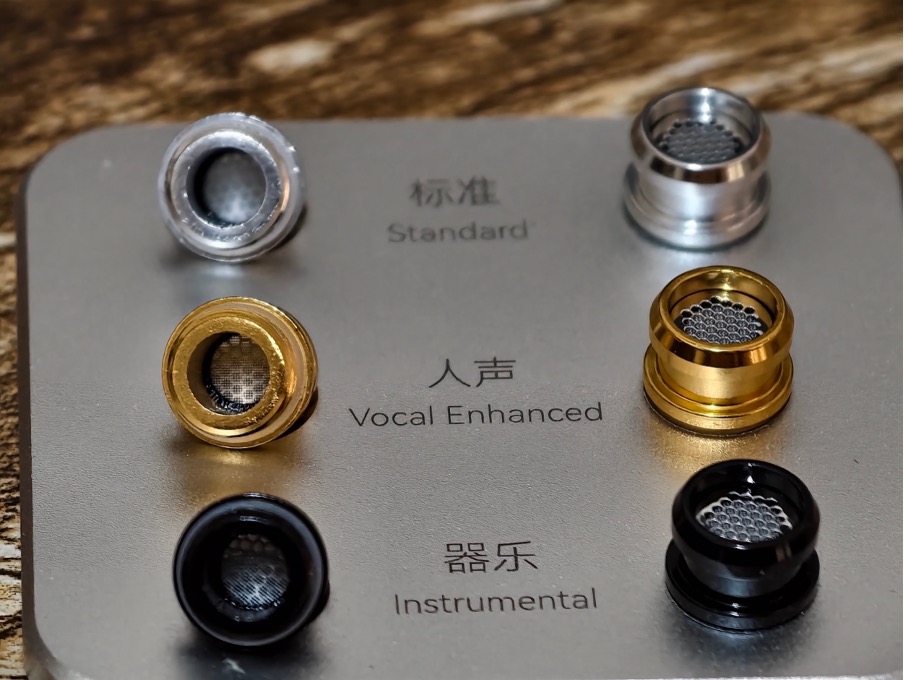
The nozzles are replaceable and come in 3 distinct sounds where black is for vocals, yellow/gold for instrumentals and silver is the standard/balanced sound. These nozzles do make a difference and although nothing major, they are audible.
The Twistura Beta has a slightly recessed type of 2 pin, 0.78mm connection and will not fit some flush type of 0.78mm cables.
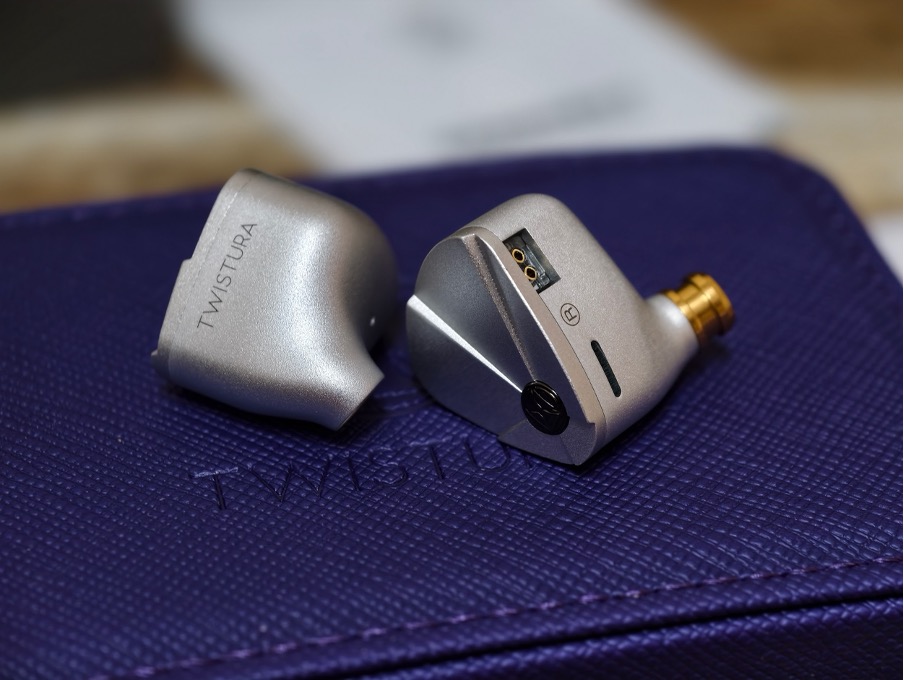
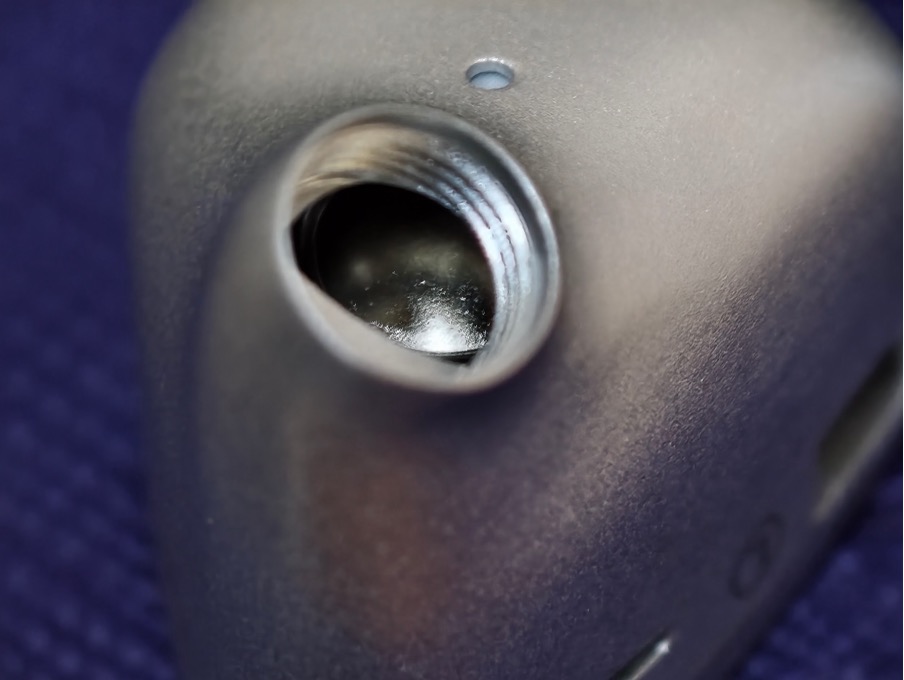
There are 2 vents present here where for the back vent, there is a rather larger rectangular vent to give the dynamic driver some breathing room and another pinhole vent near the nozzle for pressure relief. These are a well vented pair of IEM that doesn’t have pressure build up and no flex were present.
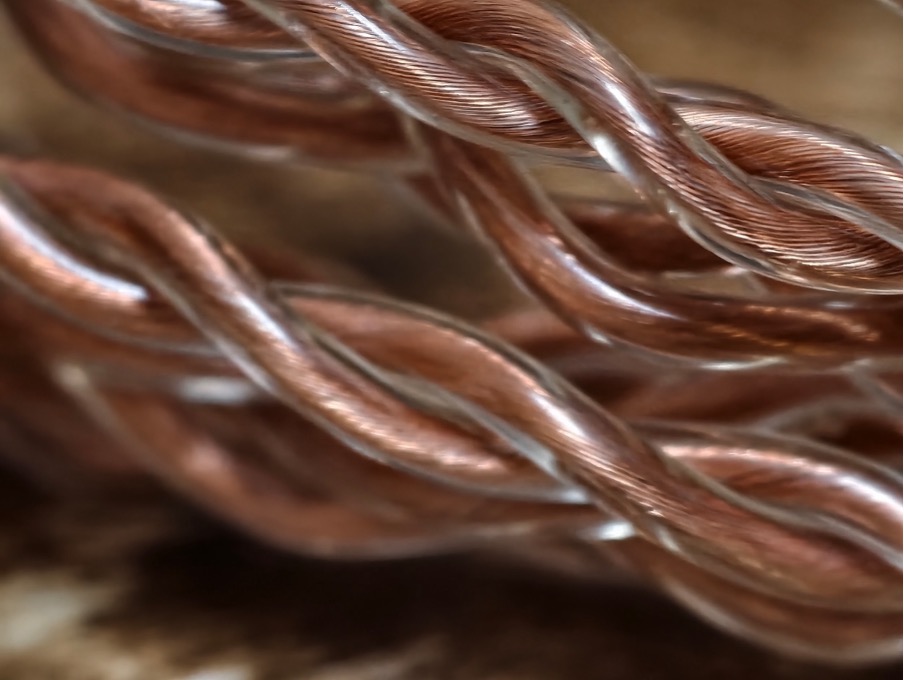
The cable provided is a high quality, high-purity oxygen-free copper cable in a 4 core braided design that is soft and pliable. The cables feature an interchangeable plug system, including 3.5mm single ended and 4.4mm balanced modules with twist locking plugs that are low profile. The sound of these cables are great, giving a balanced sound signature that doesn’t alter much of the intended sound and they look beautiful as well.
Gears Used for Comparisons
Questyle M15
Qudelix T71
EPZ TP35
FiiO BTR7
7HZ Artemis39
Time Ear BTE9
Hidizs S8 Pro Robin
Ziigaat Luna
Ziigaat Crescent
Hidizs MS2 Pro
Kiwi Ears Astral
Kiwi Ears Aether
Tigerism Dark Magician Revised
Noble Django
Letshuoer S15
Songs list
Eric Clapton – Cocaine
Celine Dion – Power Of Love
M. Nasir – Mentera Semerah Padi
Awie – Trajedi Oktober
Trance Classic & Susanne Teutenberg – You Still The One
No Doubt – Don’t Speak
Matchbox 20 – Push
Michael Jackson – Billie Jean
Charlotte de Witte – Sgadi Li Mi
Kitaro – Caravansary
Tone and Presentation
The tone of the Beta is a neutral bright sound that has a mild emphasis on the higher region. They excel in their technicalities that produce solid imaging, superb overall details and clarity that perform above their asking price. Though having some warmth in the mids, they are still a rather clinical, sterile sound that is accurate and revealing. There are some slight musicalities present but it is not their main takeaway. The bright tone here has the uniqueness of a bright glassy like sound that had great sound transparency. Dynamic range here is wide with deep lows and extended high range that is airy and energetic.
Soundstage
The Beta possesses a wide and tall soundstage that matches their asking price. The soundstage has a good sized headroom that has no boxy feel and they are airy with slightly diffused sound dispersion. The accuracy is superb with a holographic soundstage that has a good 3D spatial positioning suitable for gaming as well. Though having some immersion, these aren’t their strength here as they are slightly dry.
Separation and Timbre
Separation is great and they are a well tuned single dynamic driver that has superb cohesion with no crosstalk issues. They are able to produce a full stereo sound that is wide with no hollowness and they do perform better with 4.4mm balanced output. Timbre here is piercy, brassy and breathy with an accurate, slightly aggressive sound without any weird, unnatural timbre.
Drivability
Rated at 24 ohms at 124 dB sensitivity, they are a little sensitive and revealing, picking up noise with certain low quality quality sources. The Beta is an easy to drive IEM that doesn’t need much driving power to have ample loudness but they do scale up well with better sources, giving a richer, more dynamic overall sound. They match superbly with warm sources and it gives a fuller overall sound while still having their amazing technicalities while also preventing them from getting too dry. Though having a revealing type of sound and they are not picky with the file selection and works well even with streaming but higher quality, mastered tracks do give improvements only marginally.
The Bass (Low)
The bass here is a neutral flat sound approach that has a focus more towards the sub-bass region. The mid-bass is relatively flat without major lifts but still having a good, tight slam but it lacks authority here, making the Beta unsuited for bassheads. Details here are great and they are well textured with a super clean bass response that is free from being muddy, bloaty and there isn’t any bleed present. They are a resolving type of bass that has great transparency that gives an accurate bass reproduction but it may lack weight notes with bassy genres. Sub-bass on the other hand has a good presence with a deep reaching, satisfying rumble and they are the saving grace of the bass region as they prevent the bass from being too muted or polite. The sub-bass rumble here contributes to some weight and also gives some immersion in their overall sound with a good amount of air.
The Mids
Midrange has a mild cold tone and they are neutral with a mild lean towards the upper mids transitioning smoothly to an extended high range. They possess a mild warmth in the mids but they do border a cold sound midrange with adequate thickness in their body. Details here are the main strength with superb macro details while having good micro details retrieval. The Beta midrange is tuned for a more accurate , studio-like midrange experience that excels in their accuracy and sterility. Their resolving capabilities are excellent and they are able to produce a vivid sound that is colourless. The mids here are transparent and they reproduce sound faithfully without any major alterations. The upper mids possess a decent peak and that contributes to their bright overall signature alongside a good amount of lively brilliance. The Beta are a good IEM for vocals, especially female vocals as they are accurate, natural and lively with adequate depth. Instruments like strings, percussions and woodwind sounded clean, clear and accurate while on the other hand, some low noted instruments like bass strings do lack weight and body.
The Highs
The high range here is a neutral with a boost at the 10kHz and above to give the highs a good amount of air and presence. The high range does sound as the dominant sound in the Beta but in a small way and they are similar to the WoodNote with an energetic, boosted high that is a little spicy but the Beta does sound a tad smoother. There isn’t any sibilance nor shout present, albeit borderlining one, and they may cause fatigue with higher volume, therefore for those who seek a laid-back type of sound might want to look elsewhere. The details here are top notch and rivals competitors way above their price range as they are clean, clear, possessing an airy high that is both enjoyable and accurate. Timbre here is extended on with breathy, brassy, piercy highs that manage to sound natural and energetic. Sparkle here is sharp and strong yet controlled while possessing a mild crisp decay that gives extra life in the overall sound presentation. Intensity on the treble is on the higher side and the clarity push that this type of treble gives is great alongside a good amount of energy.
Comparisons
VS Twistura WoodNote (159USD)
The bigger brother of the Beta, Twistura WoodNote is another unique single dynamic driver IEM from them with a wood type diaphragm that has a similar neutral sound but possesses better body and warmth. They are packaged with a similar premium, fully accessorised package that fit for a king.
Highs on the Beta have the upper hand in their amount with a more sharper sparkle and similar crispness. The WoodNote high range has a smoother, less aggressive tuning but the Beta does sound a tad more refined. Details and clarity is better on the Beta but timbre on the WoodNote is more organic.
Midrange on the WoodNote has a slightly thicker body, warmer with a touch more intimate, while the Beta manages to sound cleaner, clearer with more upper mids brilliance. Clarity is on par with each other but details are better on the Beta. Vocal is more balanced on the WoodNote while Beta excels better on female vocals. Both are highly resolving but the Beta seems the more transparent pair albeit lacking in body that is present on the WoodNote.
Bass on both are similar in quantity but the mid-bass presence is better on the WoodNote while sub-bass rumble on the Beta is better. Weight notes on the WoodNote are better while the Beta has a cleaner, clearer bass with a quicker attack.
The soundstage on both is similar with good width and height alongside a big headroom. Airiness on the high range does sound more extended on the Beta. Verdict: Both are very similar to each other with minor differences but I do feel the Beta is more clinical while the WoodNote has a better overall body. Both complement each other well but gun to the head, I would go for the WoodNote
VS NF ACOUS NM25(199USD)
The flagship universal IEM from the studio focused on NF ACOUS and they are one of my top picks for a single dynamic driver IEM for the year 2025. Possessing an almost neutral reference sound with a bright overall sound that excels in their transparency and resolution. The overall sound signature here is quite similar with a neutral bright sound but the NF ACOUS sound a little more balanced while the tuning nozzles of the Beta gives users more flexibility.
The highs of the NM25 have the crisper sparkle and they are livelier but the amount in the highs are similar. Details and clarity on the NM25 sounded slightly more refined. Extension and air slightly goes to the NM25. The treble on the Beta does sound a little spicier due to the higher treble intensity.
Midrange on both are very similar with a highly detailed, neutral flat presentation but the NM25 has more space. Both are colourless but resolution on the NM25 is more vivid sound while transparency on both are similar.
The amount of bass on the Beta has a bigger presence with a more evident slam and with a bigger sub-bass presence and depth. The overall bass quality on the NM25 is purer but both are textured, refined bass. The NM25 bass extends better with more air.
The soundstage on the NM25 sounds a tad wider with slightly more air. Intimacy is on the Beta side while the NM25 is diffused.
Verdict: Value on the Beta is a winner here for their cheaper yet fuller accessories but the overall accuracy and neutrality of the NM25 is better albeit quite similar.
Sivga Que UTG(89USD)
UTG, which stands for ultra thin glass, is one of the first attempts of an IEM that incorporates a glass diaphragm and it has been rather well received by the community. Priced at just around 89USD, they are slightly cheaper than the Beta but in terms of overall package and flexibility derived from the tuning nozzles, the price difference is justifiable. Build wise, the UTG has sandalwood faceplates with a zinc alloy shell with a slight heft to them and I do prefer the design here. The overall sound has the distinctive glassy sound that excels in transparency and both sets are neutral bright tuned.
High range amount and treble intensity on the Beta is higher in a small margin. The Beta sparkle is livelier but has the same crispness. Details and clarity are similar but the Beta seems more refined with slightly more air.
Mids on both are neutral but the Beta while still slightly dry, they have a mild touch of warmth and sounds fuller than the UTG. Details are better on the micro details on the Beta while clarity is similar. UTG mids might be too sterile at times.
Bass on the Beta sounds fuller and has better presence although having similar flat mid-bass lift. Sub-bass presence on Beta is deeper with a more evident rumble. Both IEMs bass responses are clean and clear but the UTG overall bass does sound a little tame.
Soundstage width is wider on the Beta but height, headroom and air are similar.
Verdict: Beta has the edge of being more refined with less downsides of being too sterile but the high range of the UTG is less intrusive.
Synergy
Synergy wise the Twistura Beta is relatively easy as they do not need a lot of driving power for their high sensitivity but a clean source is needed. Preferably I would prefer to match a warm, musical source from the likes of Cirrus Logic and AKM to balance the bright sound signature to a more enjoyable listening alongside providing extra body to their mids. Matching them with bright sources may bring some refinements in their high range suiting trebleheads but I do find that this matching will give the Beta a dry sound that sounds a little too clinical and fatigue on higher volumes set in faster.
Good synergy
FiiO BTR7, Hidizs S8 Pro, Questyle M15, Time Ear BTE9 , Qudelix T71, EPZ TP35, FiiO Q15, Hiby FC6
Not so good synergy
FiiO KA5, FiiO Q7, EPZ TP30, Dunu DTC100
Who Is It For?
Suitable for – Classicals, acoustics, instrumentals, rock, EDM, modern pop, gaming, monitoring
Not really suitable – ACG, metal, movies
Final words
Marketed as a flagship, the Twistura Beta has big shoes to fill, a challenge I believe it meets, particularly through product quality that feels authentically flagship. Sonically, it offers a neutral signature with a clean, clear, and glass-like transparency. Priced competitively at $119 USD, its performance not only justifies the cost but may even exceed it. While there are minor downsides, such as intense treble and slightly thin mids, these are not acute and can be remedied with the included tuning nozzles or source matching. The implementation of the glass diaphragm stands out as perhaps the best on the market, showcasing Twistura’s maturity and boldness in successfully pioneering new materials.
I would rate this product a 4 and a half over 5 stars
Pros
- Solid, lightweight built and ergonomically comfortable
- Strong technicalities (imaging, separation, revealingness)
- Clean, transparent, highly resolving and accurate sound
- Good soundstage width and height with great air
- Piercy, brassy/glassy, energetic timbre
- Superb overall details and clarity
- Neutral and accurate bass with a sub-bass focused sound
- Clean, clear and accurate midrange
- Lively, sparkly and crisp high range
- High intensity treble for a detailed sound
- Easily driven
- Flagship packaging and accessories
- Tuning nozzles that works
Cons
- Thick shell (nit-pick)
- Not for bassheads, not for treble sensitive users
- Mid-bass slam a little low
- Midrange a little thin
- Fatigue on high volume
- Noise present with low quality sources
- High treble intensity (preference)