
The Kiwi Ears Allegro has been on the market for a while, yet it remains a relevant dongle thanks to its impressive sound quality and low-profile, direct USB-C connection. What truly sets it apart are the handy volume and play/pause buttons which is a practical perk that any audio enthusiast will appreciate. Priced at an approachable $59, it already delivered a solid mix of sonic performance and a durable all-aluminum build. But does the Allegro Pro still hit the mark after the hype has settled? Let’s find out.
First, a huge shout-out to Rosie and Linsoul for providing the sample unit for this honest review. We are not affiliated with the brand, nor have we received any monetary compensation as always, these are solely our impartial thoughts.
Functions & Specifications
Before we start the review, here are the specifications of the Kiwi Ears Allegro Pro;
Model: Kiwi Ears Allegro Pro
DAC Chip: Custom high-performance DAC
Operational Amplifiers: 2 x ES9603
THD+N: < 0.006% (@32 Ohms)
Output Power (3.5mm): 68mW @ 32 Ohms (THD+N <1%)
Output Power (4.4mm): 170mW @ 32 Ohms (THD+N <1%)
SNR: ≥113dB (@32 Ohms, A-Weighted)
Frequency Response: 20Hz – 40kHz
Supported Formats: PCM (up to 32bit/384kHz), DSD (DSD128, DSD64)
Input Interface: USB-C
Output Interfaces: 3.5mm single-ended, 4.4mm balanced
The Kiwi Ears Allegro Pro can be purchased at Kiwi Ears site as well as other platforms online like Linsoul.
Packaging & Accessories
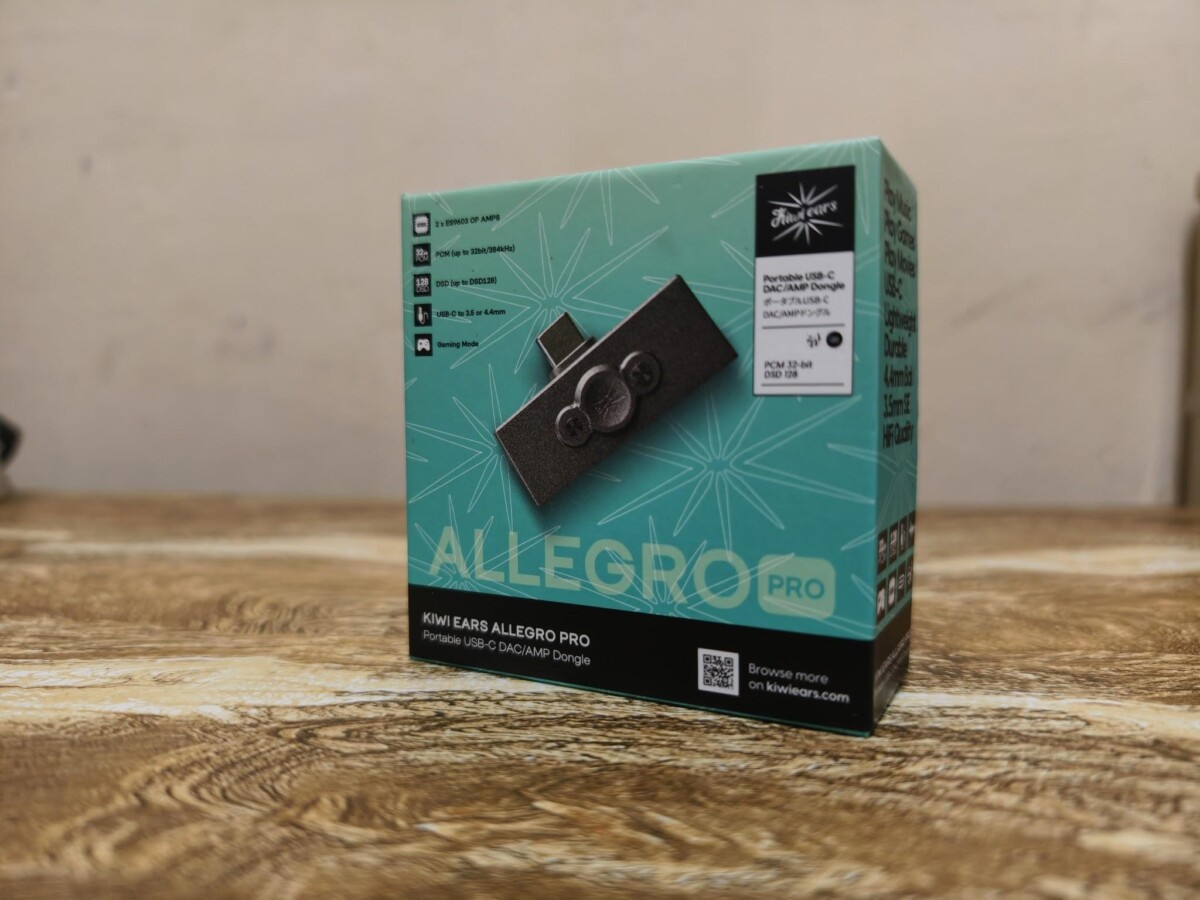
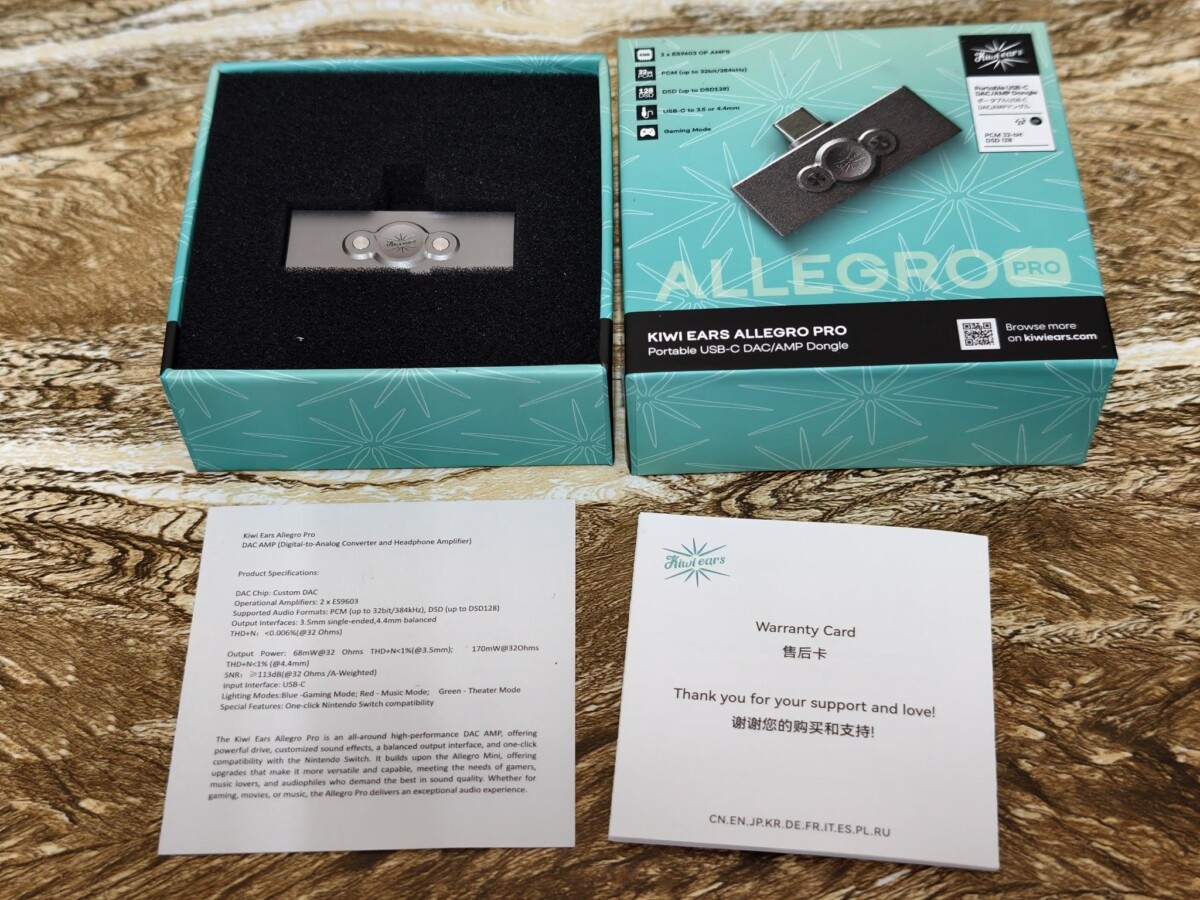
Simple paper box packaging with manual as expected of these all in one product and most of the funds are funnelled towards the product itself.
Design
Based on a rather rare T shaped, aluminum alloy body that is lightweight and compact. The build is solid and their fully enclosed metal shell does give protection from RF interference. The front of the shell has some button-like decorations with their brand stamped on it.
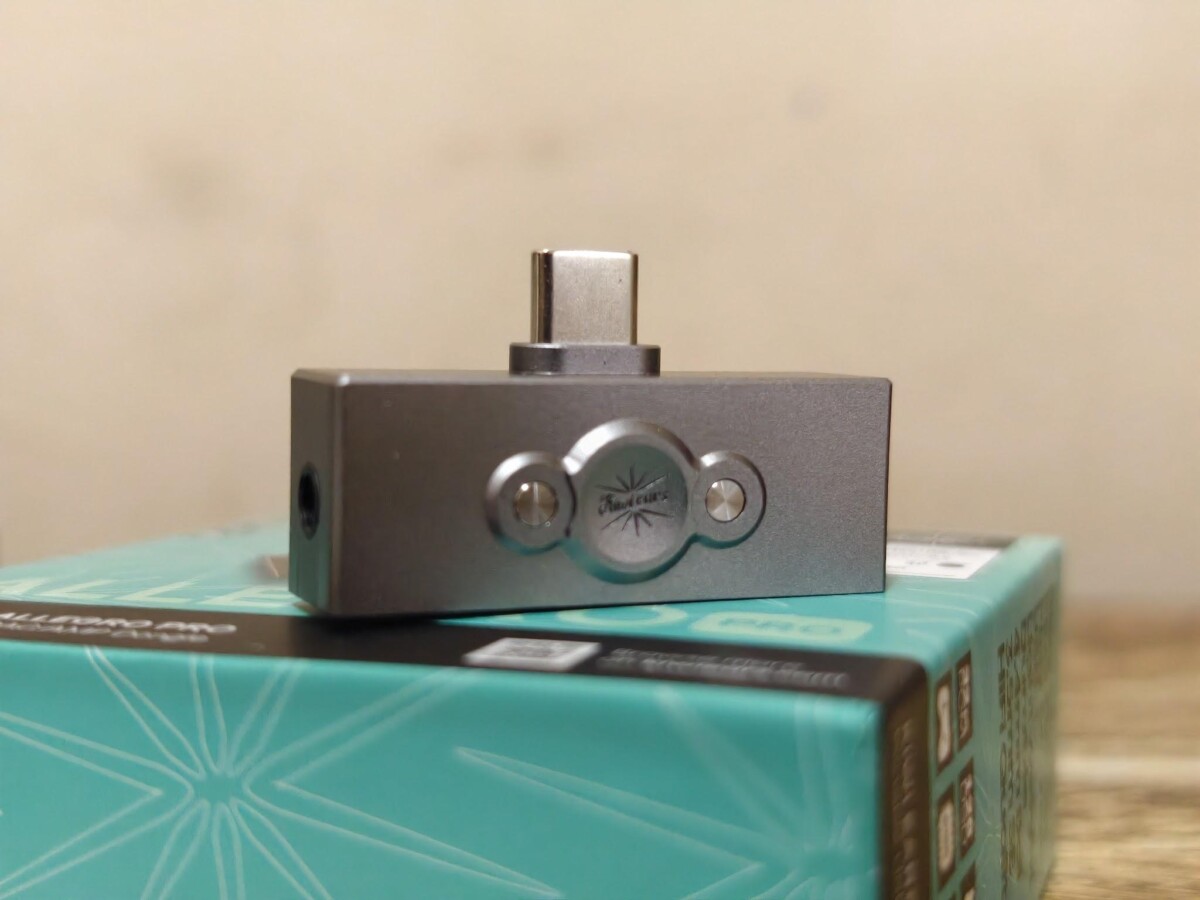
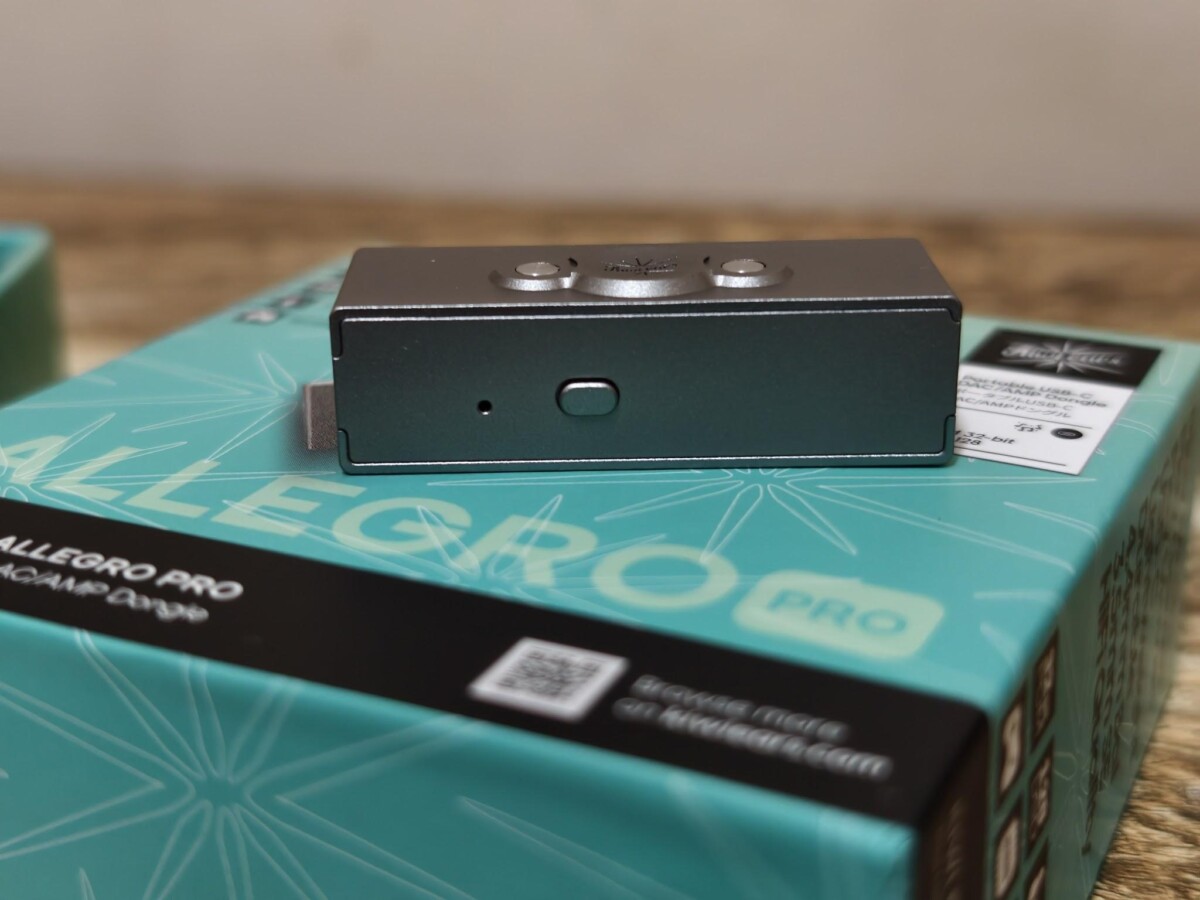
There is a small switch with a simple RGB LED light beside it present at the bottom where users can choose from 3 different sound modes where Blue is for game, Red for music and Green for theater. The modes work like a sort of equalizer that adapts the sound suited for the usage scenarios and it is possible to switch off the modes where no light is coming out from the LED. These modes have minimal effect on the overall sound albeit still audible especially with the theater mode where there is a slight increment in the immersion. The buttons work well with Android and Apple products alike without any issues.
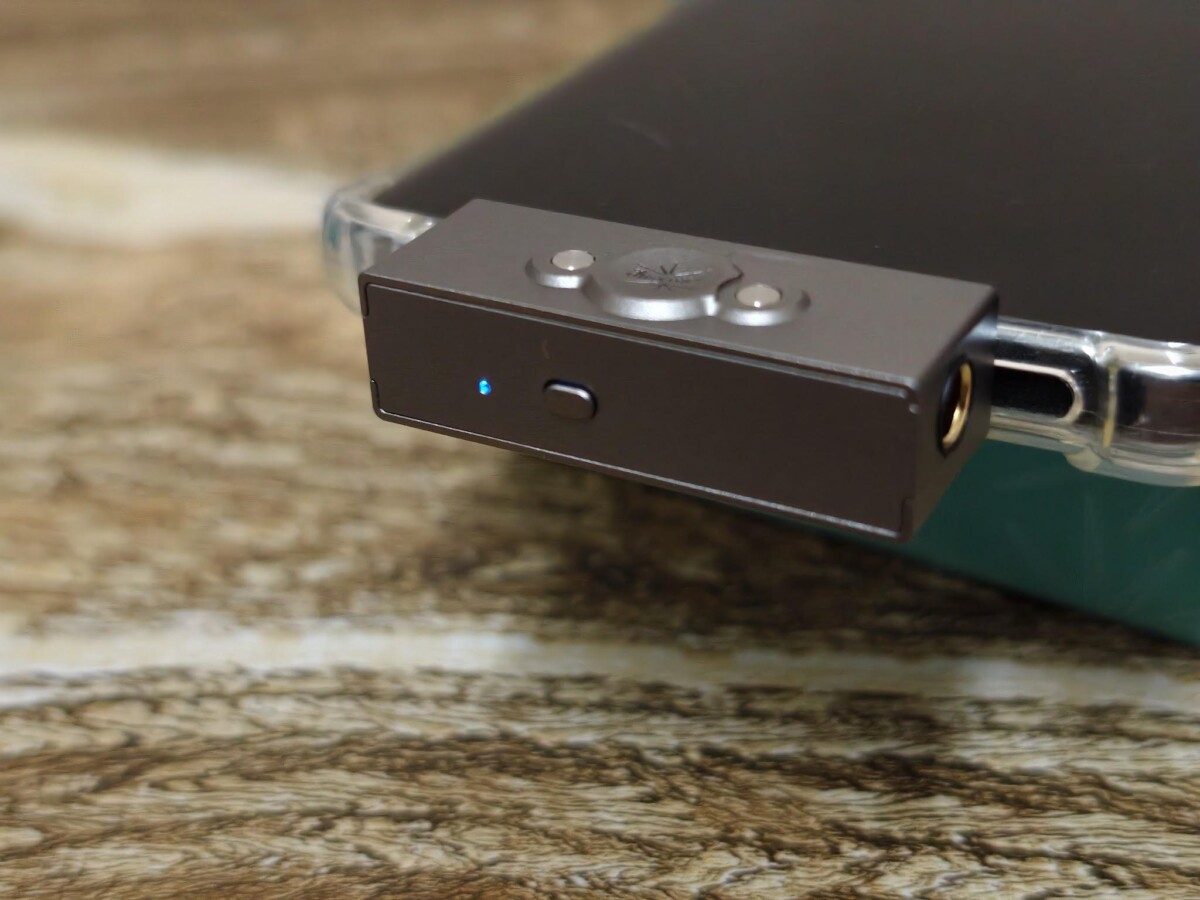
The Allegro Pro is equipped with a customized DAC chip which Kiwi Ears didn’t specify which DAC chip it is but they are fed to 2 ESS Technologies ES9603 opamps to push out a respectable 170mw at 4.4mm. It also supports seamless one-click connectivity with the Nintendo Switch with no extra setup required.
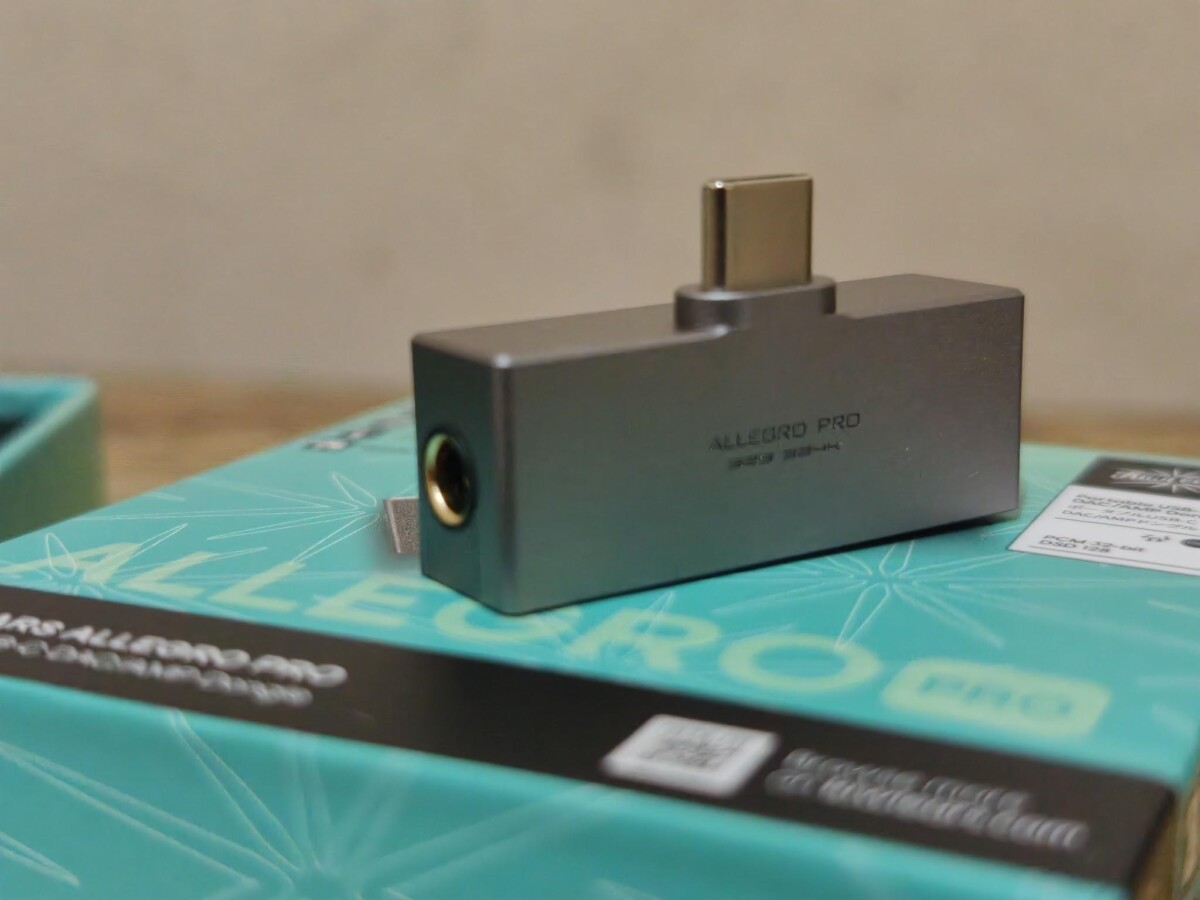
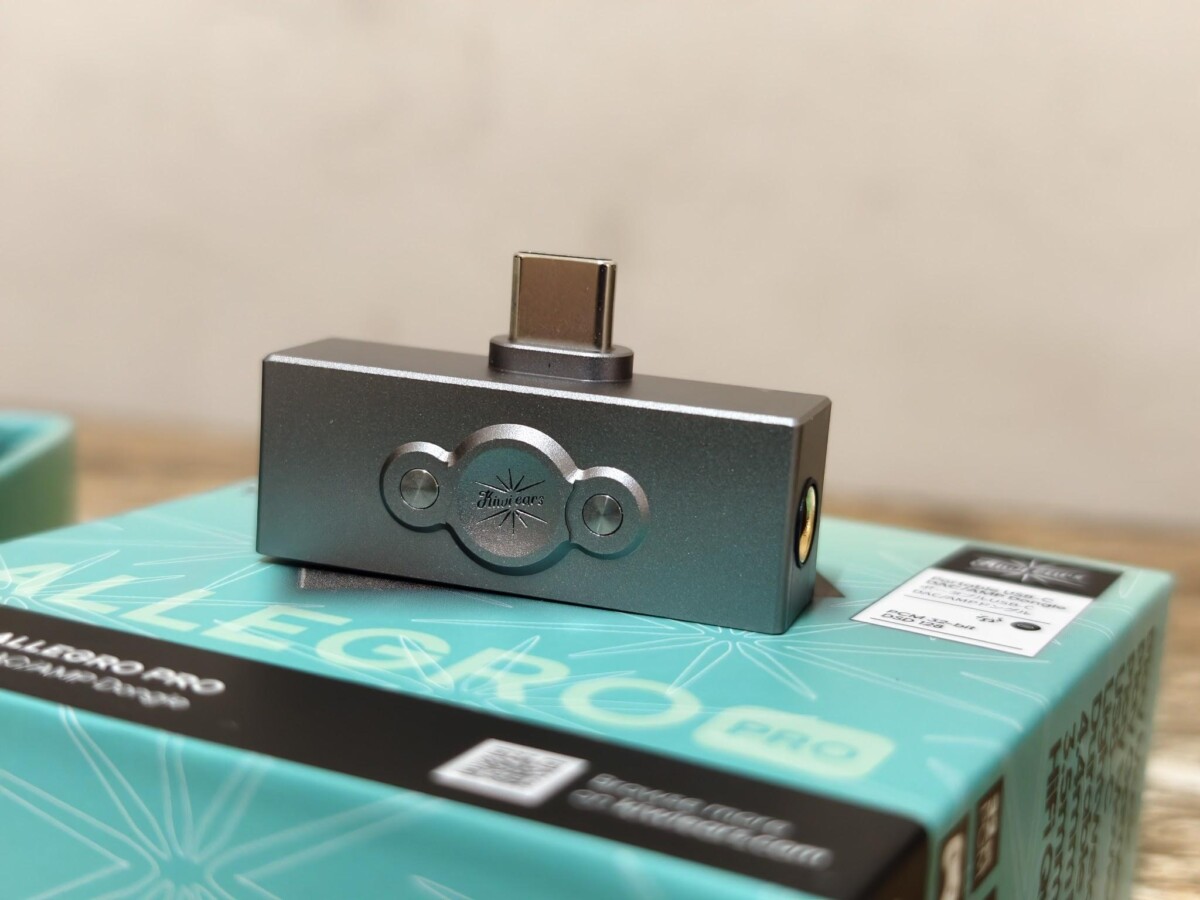
It has 2 outputs, 3.5mm and 4.4mm balanced outputs that suit a wider range of gears. The 3.5mm does support microphone input which is useful for gamers and calls.
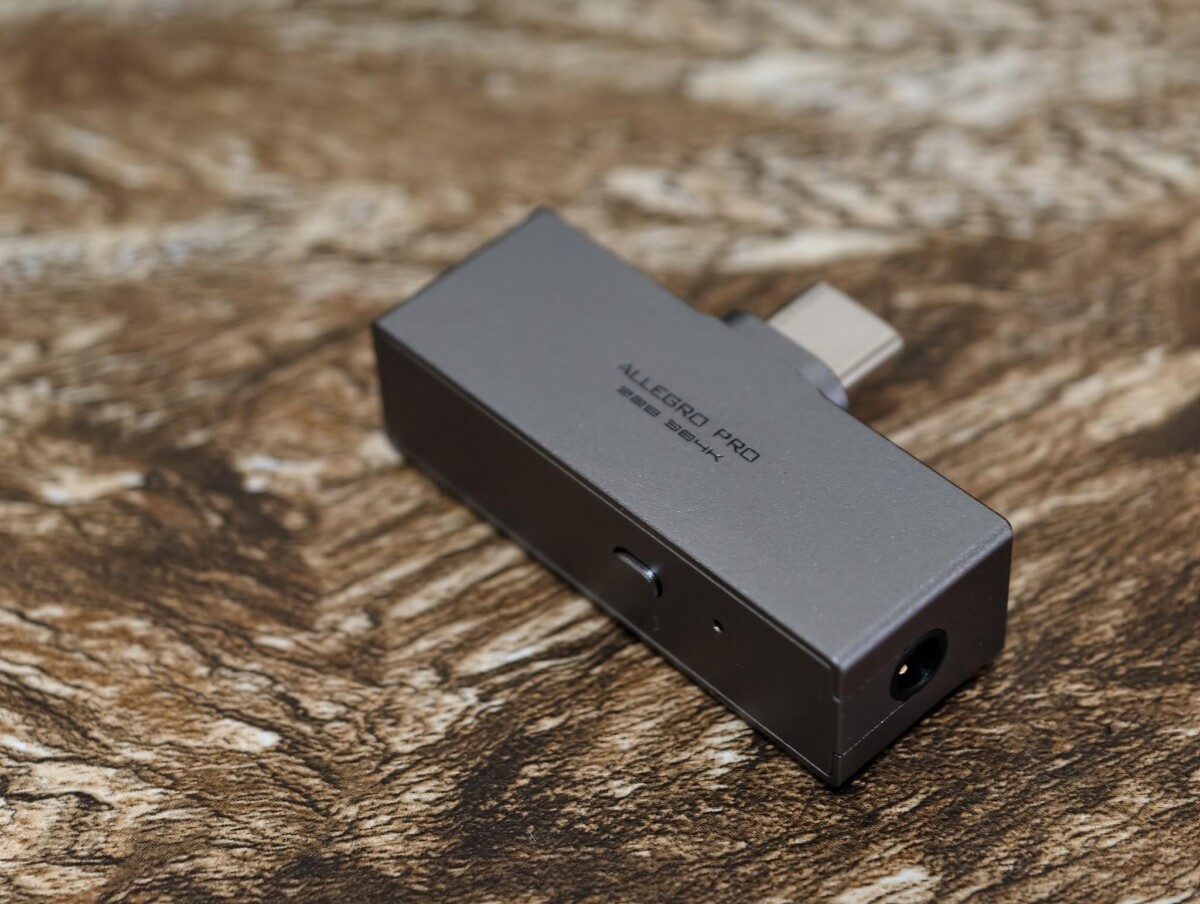
The Allegro Pro supports high-resolution audio formats, including PCM up to 32bit/384kHz and DSD up to DSD128. No LED indicators are present but there is the RGB indicator that shows it is connected. Power efficiency is superb and no major battery drainage is present.
Gears Used for Comparisons
EPZ TP35 Pro
Venture Electronics Devastator Pro Max
FiiO BTR7
Questyle M15
FiiO KA3
Blur DaBass
Kiwi Ears Astral
ZiiGaat Rumba
Toneking TO600
Moondrop Chaconne
NFACOUS NH20
Sony MDR-MV1
Songs list
Scorpion – Hurricane
Ella – Standing In The Eyes Of The World
Cheat Codes & Kris Kross Amsterdam – Sex
Whitney Houston – I Will Always Love You
Adele – Chasing Pavements
Josh Groban – You Raised Me Up
Slander, CRANKDAT & Asking Alexandria – Kneel Before Me
Blink 182 – Adam’s Song
Metallica – Fuel
Tone, Presentation, Timbre
The tone is neutral, balanced with a slightly bright tone with a mildly warm midrange that excels in details without major sterility. No major emphasis on any frequencies and they are a clean and clear sounding audio dongle. They do sound similar to an AKM style of presentation with a full-bodied sound that is smooth without any offensive peaks. Technicalities here are great with a wide dynamic range and great imaging alongside a natural, organic timbre. Separation here is superb with no crosstalk issues present that gives a wide, airy extension.
Soundstage
The soundstage here is average as it is more towards an intimate type of presentation but they are still equipped with a good width and height alongside a medium sized headroom that is free of boxy feels. Sound placement here is accurate with a good 3D, immersive, holographic soundstage suited for gaming and movies. On the other hand, the Allegro Pro do excel in producing an airy presentation with their great extension on both ends of the spectrum. Though being rather average, I do find them to be quite competent in their price range.
Drivability
Rated at 170mw at 32ohms with 4.4mm, they are actually quite impressive and powerful given their minute form, able to push most IEMs in the market as well as some earbuds and efficient headphones. Loudness is more than adequate and the dynamics being pushed out for some low sensitivity gears is impressive but they do have their limits expectedly when approaching harder to drive headphones like the HD800s or even Beyerdynamics T70. These are also a quiet device that has a low noise floor and they do not tend to pick up background noise partly due to their all metal enclosure.
The Bass (Low)
Bass here is a neutral flat presentation with a small peak in the mid-bass region that gives a punchy bass slam with a decent amount of energy when called upon. They do provide great improvements in terms of giving extra texture to the overall bass response for a more refined bass. They do not add amount in the lows, instead giving a clearer, cleaner bass for a more accurate bass presentation. Details of the bass sounds better and they do produce a more vivid bass while keeping transparency intact without altering the naturalness of the bass. Sub-bass dives deep but the rumble amount remains mostly the same. The sub-bass does sound slightly cleaner and it may clear up some bloat present in certain basshead IEMs. These aren’t for those who want some extra energy and meat in the bass, instead, it is for audiophiles who want cleaner, natural lows.
The Mids
Midrange has a slightly forward neutral approach that is balanced without any major peaks present. Transitions from the lower mids into the upper mids are smooth that gives a rich, full-bodied midrange that is natural and accurate. It gives improvements in details especially in the macro region with decent capabilities in the micro details. Clarity is great with a clean midrange reproduction that has a slightly warm and thick overall mids that excels in giving an intimate, luscious presentation. Resolution here is vivid with a tinge of colouration without hampering the transparency, producing a clean yet musical midrange. Vocals are well balanced with great depth and decent brilliance for a sweet and lively vocals. Same goes for instruments and most instruments sound correct without any major changes in timbre.
The Highs
Highs are mostly flat with an inoffensive yet present presentation without major spikes. They do produce sparkly highs with a crisp decay for a lively high range. They do not add amount in the overall high range and may lack bite for those who prefer a strong high range but they do provide refinements in terms of clarity and lessened some pierciness and sibilance in some gears. Details are decent with great clarity and high nuances are presented in a clean manner without any sibilance. Treble here is balanced with a tilt towards the intense side that contributes to the overall clarity. Timbre here is natural with a breathy high range that has decent extension and air.
Comparisons
VS Venture Electronics Devastator Pro Max (60USD)
The ultimate wired dongle from VEclan that uses a custom Sabre DAC chipset named OPTIMUS and they are for me the best wired dongle that has an enormous driving power with a decent build. It is priced similarly with the Allegro Pro.
- Dev Pro Max is possess more driving power but the noise is lower on the Allegro Pro and suited better for sensitive IEMs
- Overall details and clarity on the Dev Pro Max is better with the Allegro Pro having a more intimate sound
- Dev Pro Max does sounds more open and have a more dynamic, energetic sound while the Allegro Pro have a more natural overall sound
- Soundstage on the Dev Pro Max is slightly wider
- High range extension on Dev Pro Max is airier
- Bass on the Dev Pro Max has a slightly bigger amount, weight, texture and depth while the Allegro Pro has more accuracy
- Sub-bass is similar
- Midrange on Allegro Pro is more forward, luscious and musical while the Dev Pro Max has better details, more spacious with a neutral presentation
- High range amount on the Allegro Pro is smoother while the Dev Pro Max has more energy with a stronger treble
Vs EPZ TP35 Pro (65USD)
The well received dual CS43198 dongle from EPZ that is famed for their warm, bassy sound that excels in musicals and having perks of filters, volume control and gain switching. Priced similarly with the Allegro Pro, they are a normal dongle and users can swap the cable if the USB C fails. Built on the Allegro Pro seems more robust with their aluminum alloy body. Driving power is similar.
- Bass on the TP35 Pro is bigger, deeper and more immersive while Allegro Pro has better accuracy
- Overall details and clarity is better on the Allegro Pro
- Sub-bass is also bigger on TP35 Pro but in a slight margin
- Midrange on the Allegro Pro is more forward with slightly better details while TP35 Pro has more space with a richer, warmer sound
- High range on the Allegro Pro is slightly livelier with better sparkle and crispness while the TP35 pro has a more laid-back presentation
- Soundstage on both are similar in width and height but TP35 Pro does has a bigger headroom
- Treble on Allegro Pro is slightly more intense that gives more overall clarity
Synergy
Good synergy: Matches most gears from bright to warm. Perfect usage for IEMs, earbuds and efficient headphones lile NFACOUS NH20, Sony MDR-MV1
Not so good synergy: Bright, forward signature (nit-pick), hard to drive, low sensitivity headphones like Sennheiser HD800s, Beyerdynamis T1, T70
Who Is It For?
Suitable genres: EDM, jazz, hip-hop, classicals, pop, rock, metal, acoustics
Suitable usage: Gaming, movies, casual listeners
Not suitable genres: ACG
Not so suitable usage: Monitoring, critical listening, bassheads
Final words
The Kiwi Ears Allegro Pro is a well-crafted, no-nonsense dongle that balances audiophile-grade clarity with everyday practicality. Its neutral-bright tuning, excellent technicalities, and robust all metal build make it a versatile companion for most IEMs and efficient headphones, while the added physical controls and gaming/movie modes offer genuine value. However, those seeking a more expansive soundstage, a bass-heavy punch, or the power to drive demanding full-sized headphones may find its strengths lie elsewhere. Ultimately, the Allegro Pro stands as a refined and honest performer,ideal for listeners who prioritize accuracy and natural timbre over sheer quantity or flashy features.
4½ stars ⭐⭐⭐⭐½
Pros
- Solid aluminum alloy metal
- Low profile design, ultra portable
- Powerful enough for portable gears
- Black background noise
- Neutral to warm tuning, highly musical
- Great clarity and details
- Good imaging and separation
- Linear, punchy, high quality bass
- Natural, organic timbre
- Warm, thick, full-bodied midrange
- Good overall resolution and transparency
- Inoffensive, smooth, sparkly high range
- Laid-back treble that is fatigue freeHigh performance versus price index
- Highly efficient/low power draw
- Wide compatibility and different modes to choose from
Cons
- Not suitable for those who want extra bass
- Mildly coloured mids (nit-pick)
- Intimate soundstage (nit-pick)
- Treble can be a tad smooth/lack brilliance
- No gain control
- Sound modes has minimal effect
- Long IEM jacks hinder phone pocketability.