
Unabridged Audio AKA UA Audio has long worked hand-in-hand with the legendary Venture Electronics, playing a crucial behind-the-scenes role in producing acclaimed IEMs such as the SIE, BIE, Biggie, and Smalls as well as recent full-sized headphone the Vanguard. Now, they have set their sights on the fiercely competitive mainstream IEM budget market with an ambitious new release, the Guangzhi. Designed to disrupt the sub-$50 segment, this IEM features a single beryllium plated dynamic driver tuned for intent to redefine the budget segment. Could this be the new benchmark in its price range? First of all a shout-out to Wild Lee for reaching out and providing a unit for honest evaluation. Let’s see if the UA Audio Guangzhi will live up to expectations.
We are not affiliated nor taken any monetary exchange for these products and the review is an honest take which is an opinionated view.
Functions & Specifications
Before we start the review, here are the specifications of the UA Guangzhi;
- Driver Diameter: 10mm
- Driver Type: Beryllium-Plated dome with N52 Rare-Earth Magnet
- Shell: Medical Grade Resin
- Impedance: 32 Ohms
- Sensitivity: 101dB (1mW)
- Frequency Range: 20-20000Hz (±10dB)
- Rated Power; 1200mW
- Line Length: 1.2m (±2cm)
- Cable Material: Silver-Plated Cable
The UA Guangzhi can be purchased at Venture Electronic official store and various platforms worldwide
https://www.veclan.com/phone/eac_phone_sel_one?eng_ApplianceVo.eac_id=113
Packaging & Accessories
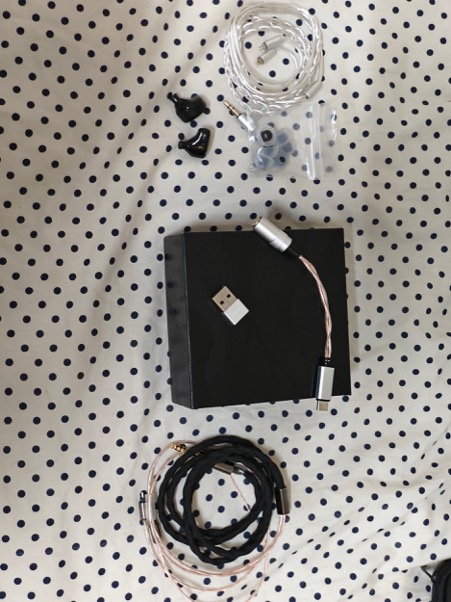
Similar to most of Venture Electronics products, all funds have been funneled to the product quality and performance putting not much focus on the packaging department. It comes in a small cube box that has a hard case inside that houses the IEM head, a 3.5mm cable and 3 pairs of silicone eartips.
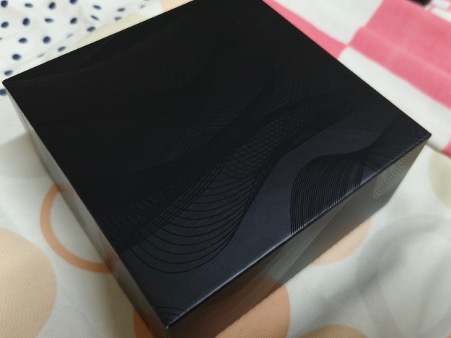
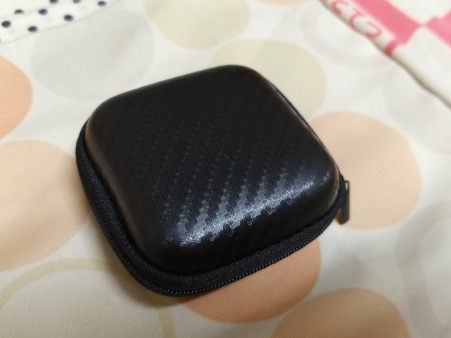
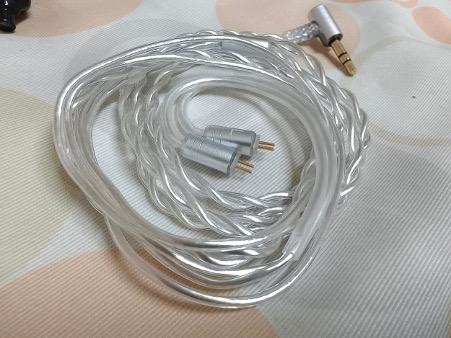
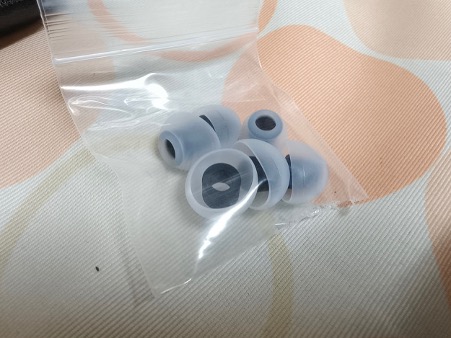
There are bundled options with the venerable Vita cable, Devastator dongle and ODO dongle with a reduced price for those highly acclaimed accessories. The one with me is the Vita 4.4mm cable with the Devastator dongle.
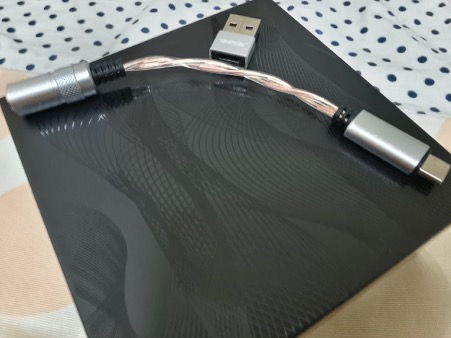
Devastator Dongle The Devastator is a top of the line wired dongle that has a massive driving power at 1.9V RMS/ 110mv @ 32ohms. The sound is neutral with a bass boosted presentation and they are touted as one of the best wired dongles around.
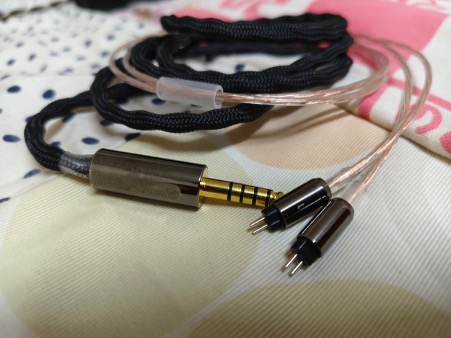
Vita Cable
The Vita is a flagship cable created by Wild Lee to provide flagship performance at a rather low price. They are a custom OFC cable with a unique DNA helix construction giving a rather thick and refined overall sound. Built here is exquisite, lightweight and it looks really premium with all metal parts used.
Design
Now on to the design where we will find the usual CIEM style resin body but in a small form factor. The small size here is a welcomed form that will fit small ear concha users suiting a vast range of users and the fit is ergonomic giving a fatigue free fit suitable even for workouts. The Guangzhi is a medical grade resin cast that has been hand polished well in solid black and the faceplate design is a forged carbon with the UA brand in metal. Overall a very solid build and the size makes it a unique pair of IEM.
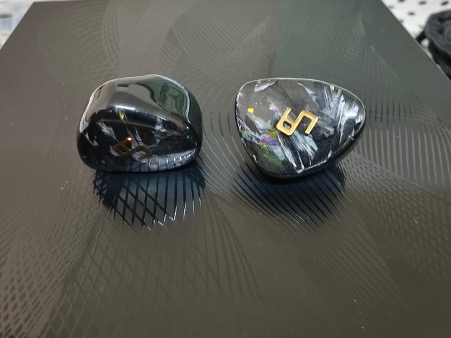
Now the Guangzhi is driven by a single 10mm dynamic driver with a beryllium plated dome that is driven by N52 rare earth magnets. Not much details can be found on these drivers but it has signs of a high quality driver and manages to withstand high volumes without distortion.
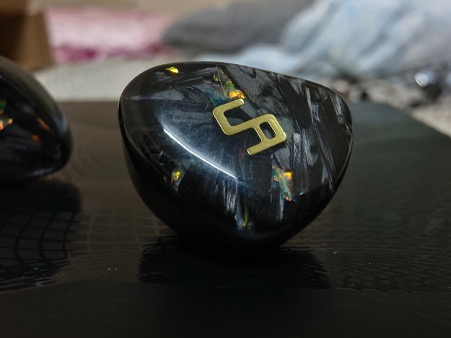
The front nozzle is fitted with metal mesh to prevent moisture and dust entering. Nozzle size is normal with a maximum of 5.5mm diameter with a medium length.

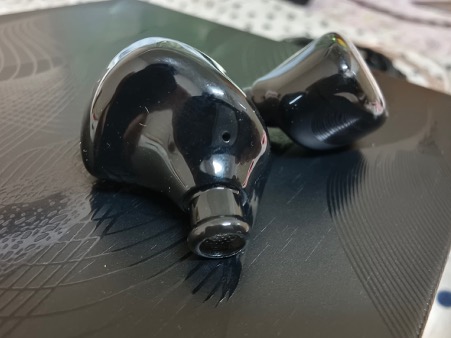
There is only 1 vent hole situated below the 2 pin connector in charge of the back dynamic driver vents and another pressure relief vent near the nozzle. Gladly, no driver flex and pressure build up is present which is great for the driver’s longevity as well as comfort.
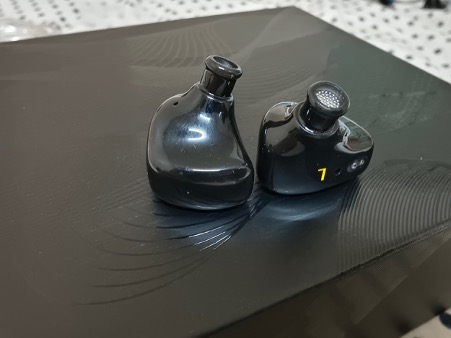
The connectors being used are standard flush 0.78mm connectors.
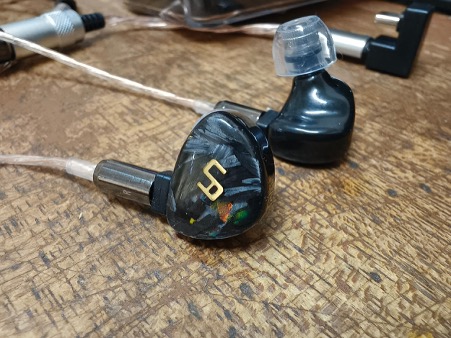
The included case is a square zippered hardcase that is rather small but it does the job of protecting the IEM.
Cable here is a simple 4 core silver plated oxygen free copper cable that has a 4 core twisted braid and they actually look pretty basic and the Guangzhi does benefit from cable rolling, thus the bundled Vita cable is highly recommended as it does provide refinements for the Guangzhi.
Gears Used for Comparisons
Questyle M15
Qudelix T71
EPZ TP35
FiiO BTR7
7HZ Artemis39
Time Ear BTE9
Hidizs S8 Pro Robin
Ziigaat Luna
Ziigaat Crescent
Kiwi Ears Astral
BQEYZ BQ10
Tigerism Dark Magician Revised
Letshuoer S15
Sivga Que UTG
Songs list
Scorpion – Hurricane
Ella – Standing In The Eyes Of The World
Dakota – Avalon 6AM
Achilles feat, Wintersix – Night Vision
Adele – Someone Like You
Nadeera – Bukan Lagi Kita
Michael Jackson – Billie Jean
Stevie Wonder – Isn’t She Lovely
Bunkface – Situasi
Guns & Roses – November Rain
Tone and Presentation
The tone of the UA Guangzhi is a rather neutral tuning as with a mild bass boost that gives an energetic overall sound that excels in musicalities and technicalities as well. The overall details and clarity is superb as the tuning here is done in a mature way that will suit most usage scenarios. The tone here is quite balanced with a bright presentation that has some warmth in the midrange. These aren’t a clinical performer rather than a fun tuning that doesn’t skip on their technicalities.
Soundstage
The soundstage here is rather average but it does possess some width and height. It has a free field sound that projects sound forward similar to a near field monitor rather than dispersing the sound. Headroom here is decent and manages to prevent boxiness but it does lack air in the higher range. The Guangzhi does have an accurate positioning with great immersion that gives a holographic soundstage that is suitable for gaming and movies.
Separation and Timbre
Separation here is great as they are able to provide decent imaging with a wide stereo width that separates the channels in great accuracy. The sound here is full and possesses a wide dynamic range with a cohesive sound that is typical of a well tuned single dynamic driver. There are no crosstalk issues and they sound even better in this giving a wider dynamic range with balanced outputs. Timbre is a slightly piercy, organic, warm and rich sound that gives a fun and easy to like sound as they are clean and clear while having a full, warmish sound signature.
Drivability
Rated at 32 ohms with a 101 db sensitivity, they are an easily driven IEM with sufficient volume even with a simple dongle and will scale better with better source. They are slightly revealing and transparent that will show flaws in recording but only marginally so they will work well even with low quality source like streaming. In terms of scalability, the Guangzhi actually scales up well with powerful sources as they provide a more refined overall sound and smoothens out the high range. Sources like AKM, Cirrus Logic and Burr Brown will give the Guangzhi a smoother overall presentation but on some Sabre based source that is bright at times sounds a little harsh.
The Bass (Low)
The bass on the Guangzhi is a neutral bass that is slightly boosted as they have a mild mid-bass lift that gives the bass some authority when called upon, possessing a good amount of energy. The amount of the lows here manages to sound natural living up to a dynamic bass presence. Details here are superb with great texture that audibly shows layers of the bass in a clean, clear manner that is bloat and they have no bleed issues that affect the midrange even on high volumes. The pace here is quick and possesses a tight slam that has a slow roll off giving a clean bass decay that lingers a little. The amount here might suit bass lovers but not bassheads as they don’t have a super strong rumble that bassheads yearn for. Sub-bass here has a good depth that also has some emphasis to it matching the mid bass lift well giving an even bass presentation with a clean rumbling that gives the overall sound a little more soul.
The Mids
The midrange here is neutral that has a slight emphasis towards the high region that gives a mild bright overall tone. The amount of detail here is great that punches well above their asking price into the . Their ability to display macro details is great with decent micro details retrieval but a focus more on the former. Their accuracy here is also great with a natural timbre that has a very mild coloration present that gives a vivid sound that resolves well without affecting the transparency majorly. The midrange has some warmth to it with a thick, full-bodied presentation that is luscious and sweet. With the upper midrange peak, there is a decent amount of brilliance but it does lack a crisp refinement that actually sounds a little harsh but in a small margin. The vocals here are rich and sweet suiting female and male vocals with a clean, natural vocal while instruments sound natural and they perform well especially with drum, cello, oboe, strings but on certain high staccato instruments, they do display some pierciness especially with bright sources.
The Highs
The high range here is an almost neutral flat type of highs with a small amount of peak that extends from 8khz all the way to 10khz region and they are energetic with a good amount of bite. Details and clarity here is great with a strong, clean sparkle that is lively but it does lack a crisp decay. The high range does sound natural with a clean timbre that presents high nuances well without any sibilance, although bordering on being harsh and that being said, those who are very treble sensitive might find the highs a tad strong but for me personally, the amount here is just right. The high range does have a slightly fast roll off with a rather average extension that has mediocre air but on the bright side, the Guangzhi manages to sound lively that is still quite enjoyable. Treble here has a decent dose of intensity that contributes to the overall clarity while still staying within the realm of accuracy.
Comparisons
VS BQEYZ BQ10
The entry IEM from BQEYZ China costing a mere 30USD is a neutral tuning single dynamic driver that has been praised for their amazing sound performance at a very wallet friendly price. The size of the BQ10 is a more common CIEM style that is bigger than the Guangzhi but both have a comfy fit. Isolation in Guangzhi is better and they have a more low profile fit. Both of these IEM are packaged similarly with barebone accessories but the cable on Guangzhi does look better.
The high range on the Guangzhi is stronger with a more piercing high range but the BQ10 does sound airier with a smoother, crisper decay. Details and clarity here better on the Guangzhi with a stronger treble making the clarity perceived as better but a little harsher. Timbre in Guangzhi does sound a tad more natural and organic.
Midranges on the Guangzhi do sound slightly thicker and they do have more warmth present with a more forward mids that has very mild coloration. The BQ10 does have the edge in neutrality with slightly better transparency but the Guangzhi is more resolving. Female vocals on Guangzhi does sound livelier while the BQ10 has smoother vocals.
Bass quantity on the Guangzhi is greater with a bigger mid bass lift that gives more authority but only marginally. The BQ10 bass does sound more accurate with a more natural amount, it does lack extension like on the Guangzhi. Sub-bass amounts on both are similar but the Guangzhi seems to have a more evident slam. Pace on the bass of the Guangzhi seems a tad faster with better texture.
The soundstage on the BQ10 is wider and taller with better air and their headroom is also slightly bigger but both sets have no boxiness issues.
Verdict: BQ10 for their neutral performance but the Guangzhi has a more soulful and fun signature.
VS Sivga Que UTG
The recent entry release from Sivga equipped with a unique 10mm ultra thin glass diaphragm with a zinc alloy shell with wood faceplates. The build of the zinc alloy does give the UTG a more robust build but it does have some weight to them. The UTG does cost almost twice the asking price but they do come with great accessories like a leather case and a modular braided cable. The sound profile of the UTG has a neutral flat sound with a slightly cold sound that is clean and clear like their name suggests.
High regions are similar in amount but the Guangzhi livelier while the UTG have a crisper sparkle and possess more air and extension. Details are slightly better on the UTG but clarity is similar. Treble on UTG is more intense while giving a better perceived clarity.
The midrange on the Guangzhi is thicker, more forward and has a fuller body with a more evident lower midrange giving a deeper sounding midrange. The UTG mids do sound brighter in the upper mids and have more brilliance and clarity while details are similar. Vocals are more balanced on the Guangzhi but the UTG excels better on female vocals.
Bass quantity on the Guangzhi has a bigger mid-bass lift with a more evident slam that possesses better energy alongside a stronger sub-bass rumble versus the rather lean, flat bass of the UTG. The UTG bass seems more natural but it does lack authority. Details and clarity here is slightly better on UTG while extension and air on the Guangzhi has the edge.
The soundstage on both has decent width and height but airiness is on the UTG.
Verdict: Guangzhi for their amazing value proposition and a fuller sound while the UTG for their overall clarity and clinicalities.
Synergy
For synergy, I would recommend pairing them with a warm to balanced source to smoothen out the treble while also maintaining their thick warm sound for it to be more enjoyable than it is. Source chipsets such as AKM, Cirrus Logic and Burr Brown are highly recommended but not much can be said for strong treble of the Sabre based chipset that might give a harsher high range. Amplification is not obligated as they do not need massive power to have adequate loudness but a clean source can actually make their technicalities a step ahead. Though being slightly revealing, they aren’t picky with the file selections but a well mastered, high bitrate track will indeed perform better albeit marginally.
Good pairing: FiiO BTR7, Qudelix T71, Questyle M15, 7HZ Artemis39, Hiby FC6, EPZ TP35, IFI Diablo, Hidizs S8 Pro, VE Devastator
Not so good pairing: FiiO Q7, FiiO KA5, EPZ TP30
Who Is It For?
Suitable genres/usage: Acoustics, rock, pop, instrumentals, EDM, hip-hop, gaming, movies
Not suitable genres/usage: Metal, ACG, monitoring
Final words
Venturing into the mainstream CIEM style design, UA Audio has delivered a remarkably mature first attempt showcasing their experience and enthusiasm. At the heart of this sub-$50 IEM is a single dynamic driver tuned for a rich, highly musical, yet surprisingly balanced sound. It offers a standout bang-for-buck performance that feels built to last. While the soundstage is more intimate than expansive and the high range can edge into harshness, these are minor nitpicks in an otherwise excellent package. UA Audio’s entry is not just successful, it’s a uniquely compelling and highly recommended option in a crowded sub 50USD market.
I would rate the UA Audio Guangzhi a solid 4 and a half stars for their high value versus performance index.
Pros
- Solid build, well casted, glossy resin with an ergonomic, small shell
- Great technicalities with a mature dynamic tuning
- Neutral tuning with a touch of warmth
- Great details and clarity
- Organic and rich timbre with high musicalities
- Lifted, authoritative bass response
- Flat, clean, full-bodied midrange
- Lively sparkle
- Decent transparency and highly resolving
- Easily driven
- Fairly balanced timbre
- High sound value in sub 50USD range
Cons
- Barebone accessories (nit-pick)
- High range a little harsh
- Midrange had some minor colouration
- Soundstage a little intimate
- Not for critical listeners (nit-pick)